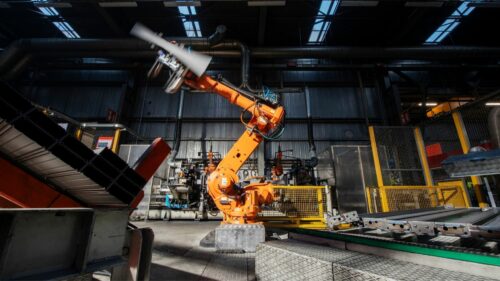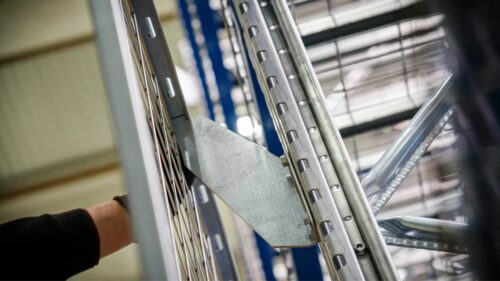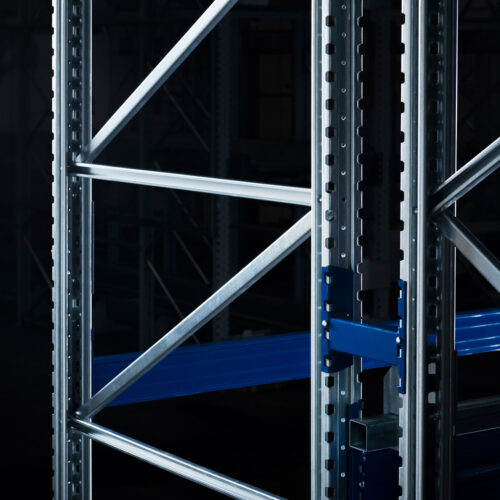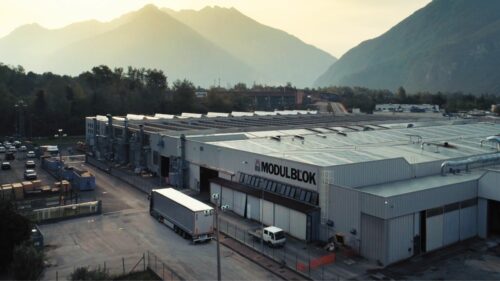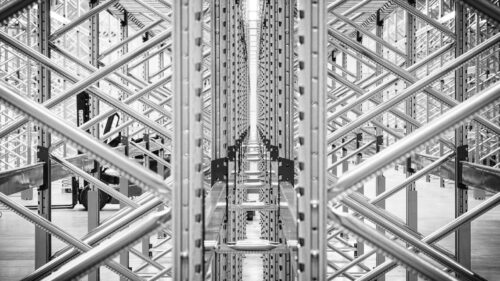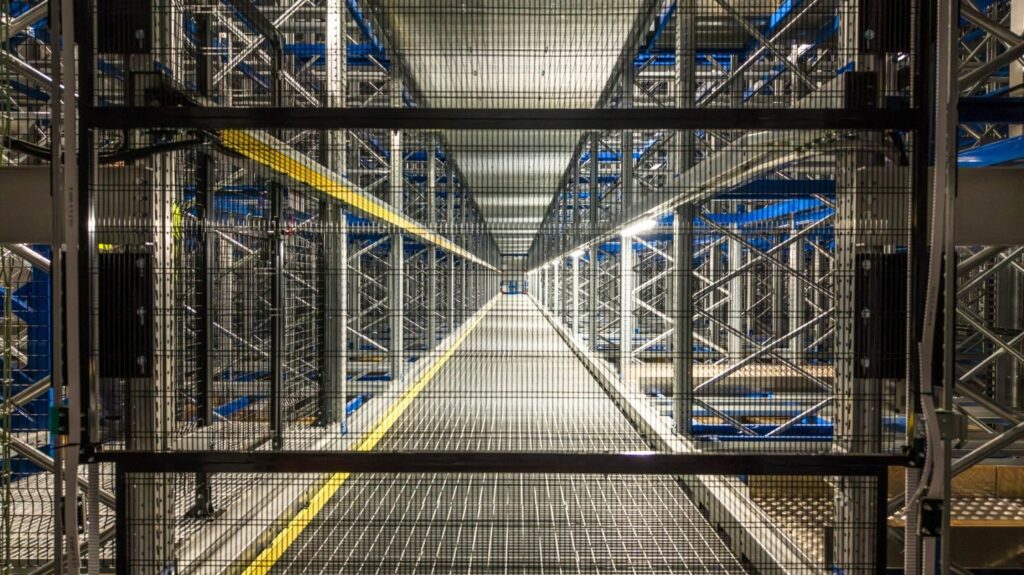
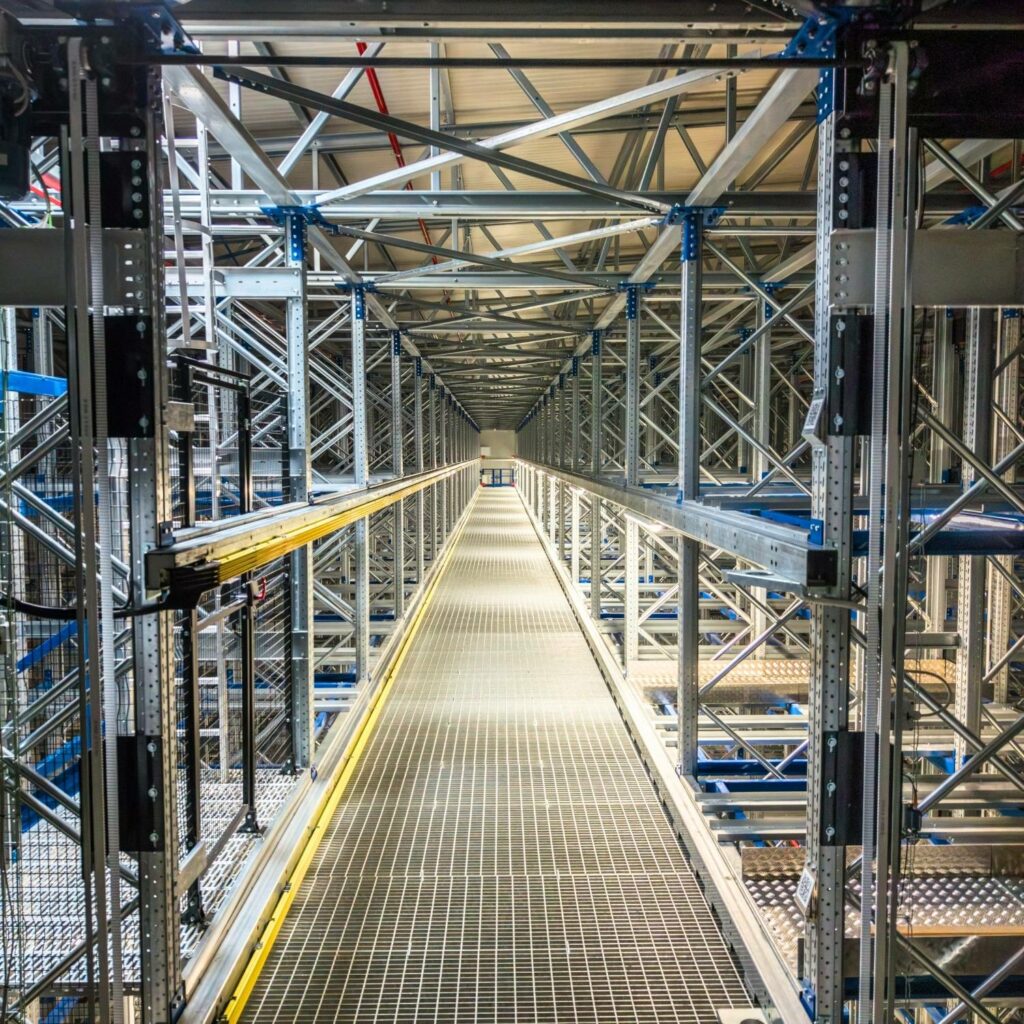
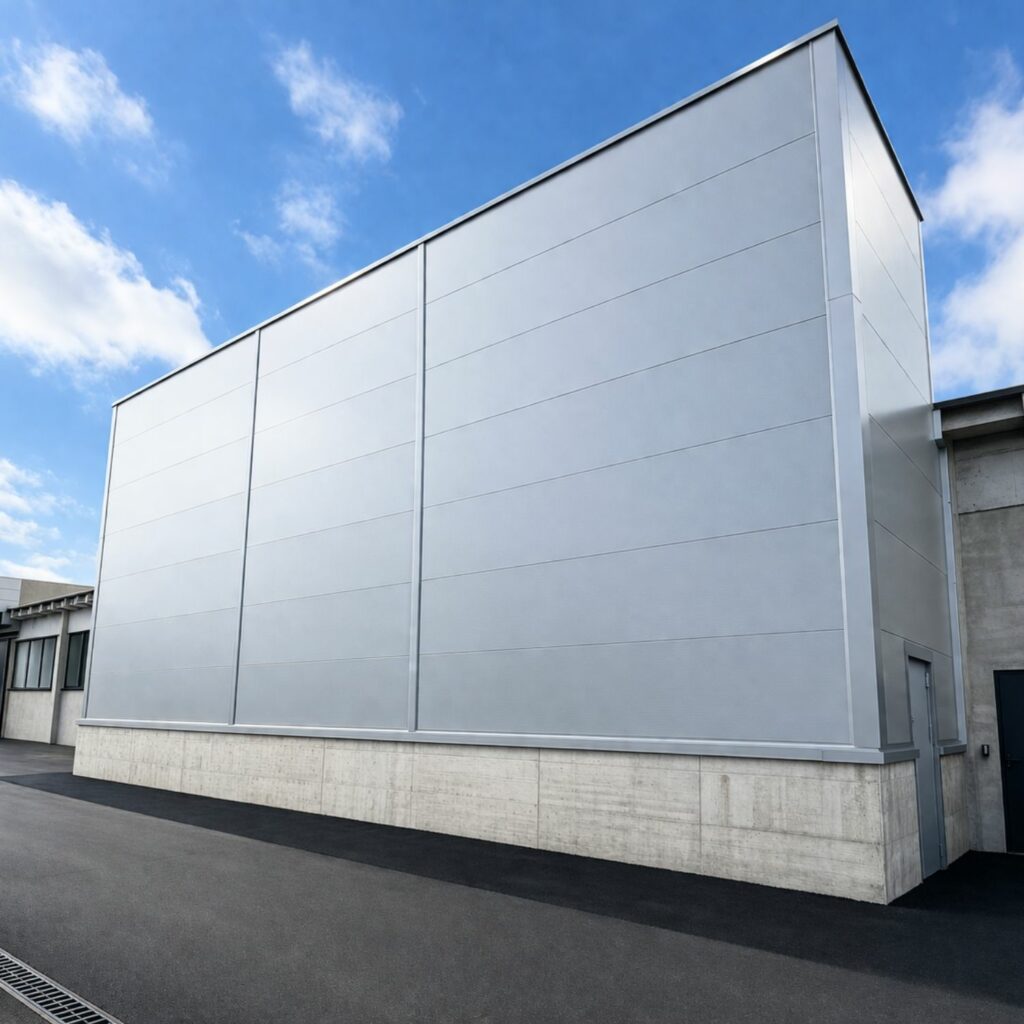


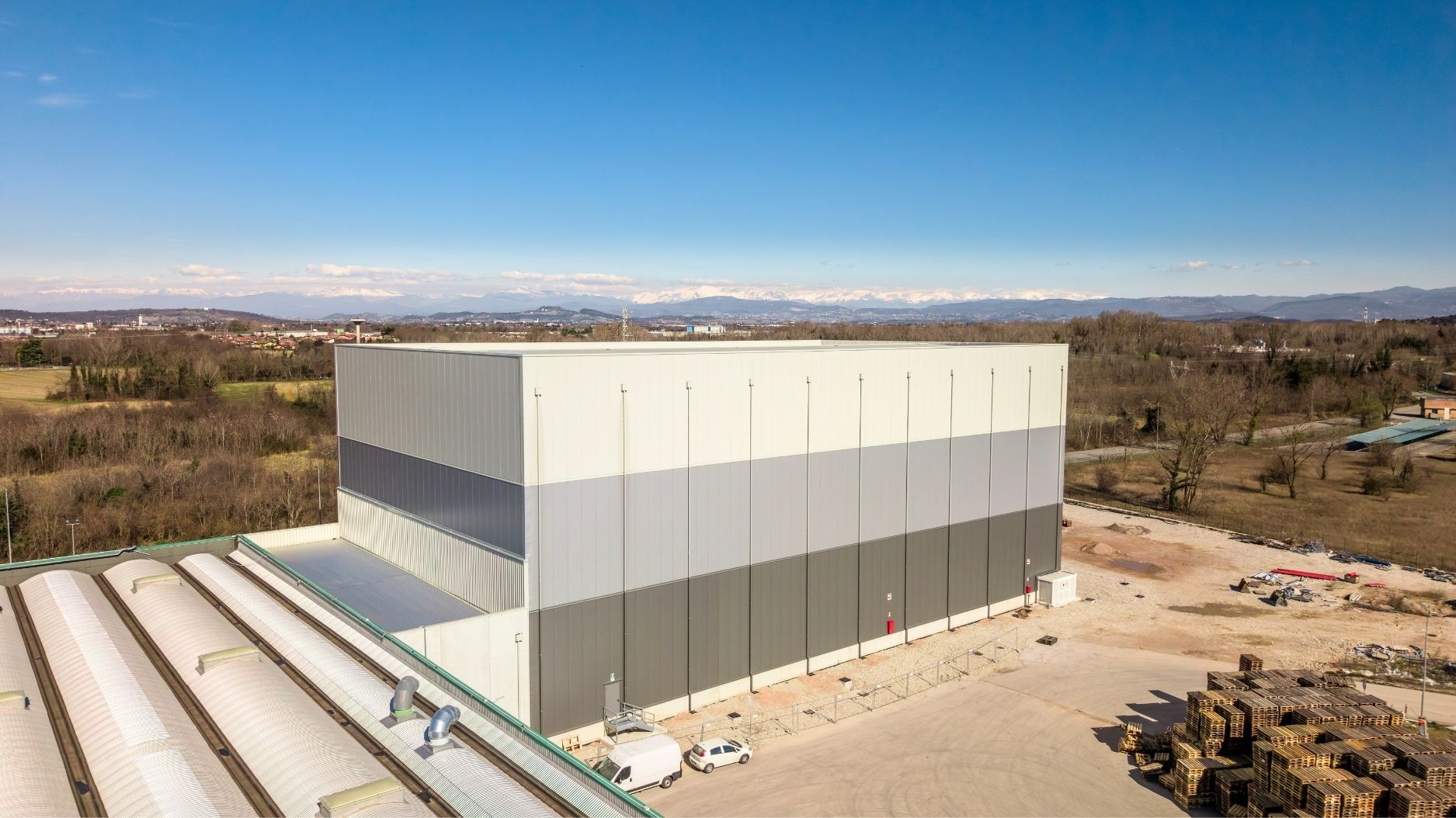
An automated rack-supported warehouse integrates the storage structure, the building and the automation system into a single engineered solution. In this configuration, the racking structure serves as the building’s primary supporting framework, enabling vertical expansion, high-density storage and automated pallet handling in logistics-intensive environments. The result is a single integrated infrastructure that combines maximum storage capacity, automated material flows and efficient use of available volume. The integration of the steel structure, automated handling technologies, warehouse management software and operational processes enables continuous pallet flows, high throughput performance and maximum storage density, while ensuring reliability, control and operational continuity throughout the logistics process.
01
Rack-supported warehouses are an effective solution when storage capacity must be significantly increased without expanding the building footprint.
By integrating the storage structure and automation into a single engineered system, they maximise the use of available volume through vertical development while achieving exceptionally high storage density.
02
Rack-supported warehouses are ideally suited to logistics environments characterised by high throughput, continuous operations and intensive pallet movements. Automated pallet handling enables high-volume flows to be managed efficiently while ensuring full control, traceability and operational continuity across logistics and production processes.
03
Rack-supported warehouses are particularly effective when a project requires full integration between the building structure, the storage system and automated material handling technologies. This integrated approach helps optimise operational performance, shorten project delivery times and improve the overall energy efficiency of the logistics facility.
Modulblok automated rack-supported warehouses are built around a portfolio of technologies selected according to the specific operational requirements of each project. Rather than relying on a standard configuration, every solution is engineered based on a detailed analysis of material flows, inventory turnover, facility layout and load-unit characteristics. This design-driven approach ensures that storage, handling and automation technologies are aligned with the operational objectives of the warehouse, delivering the most effective balance of capacity, throughput and efficiency.
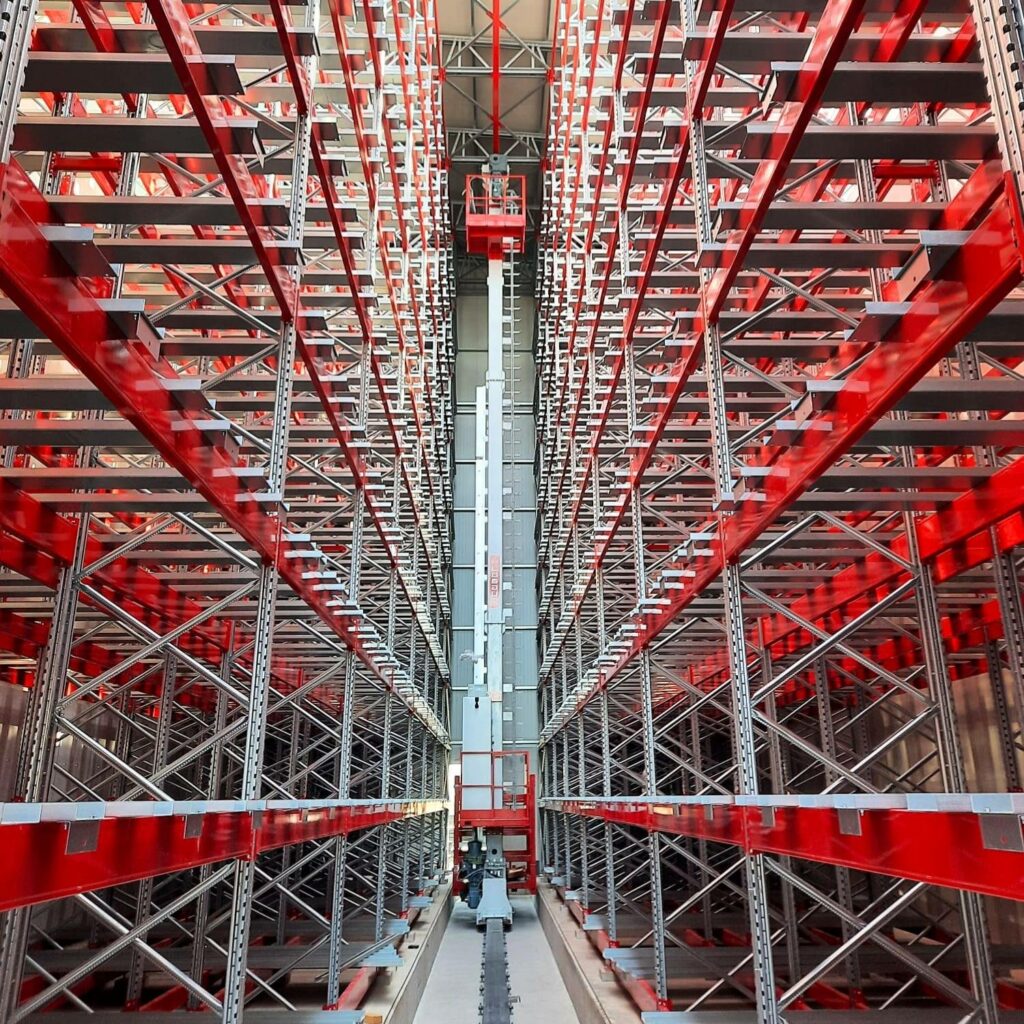
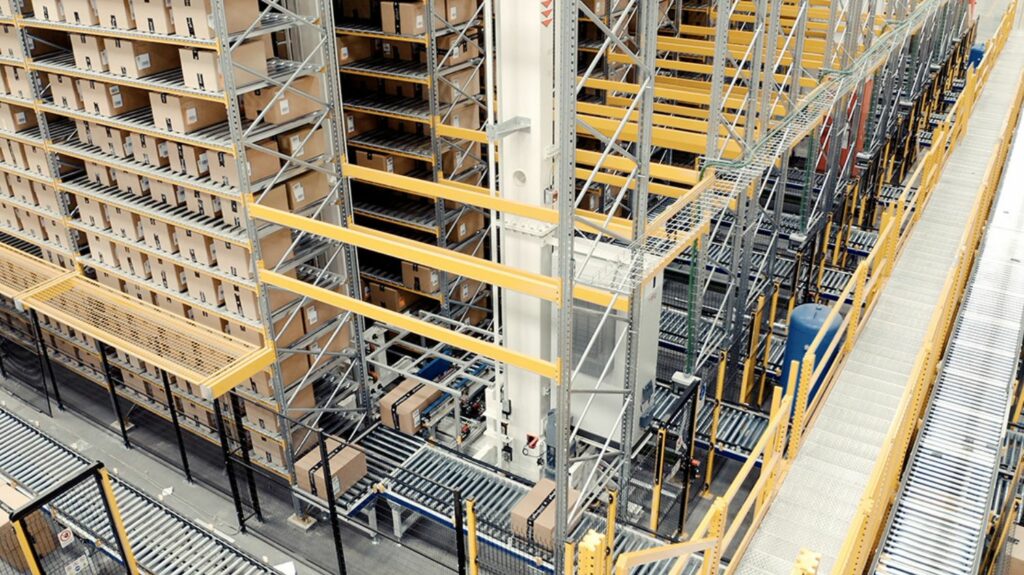
Automated storage systems based on aisle-operating stacker cranes, designed for intensive pallet handling with direct access to every load unit. They enable high storage heights, efficient throughput and precise control of storage and retrieval operations, making them particularly suitable for environments with a high number of SKUs and stringent traceability requirements.
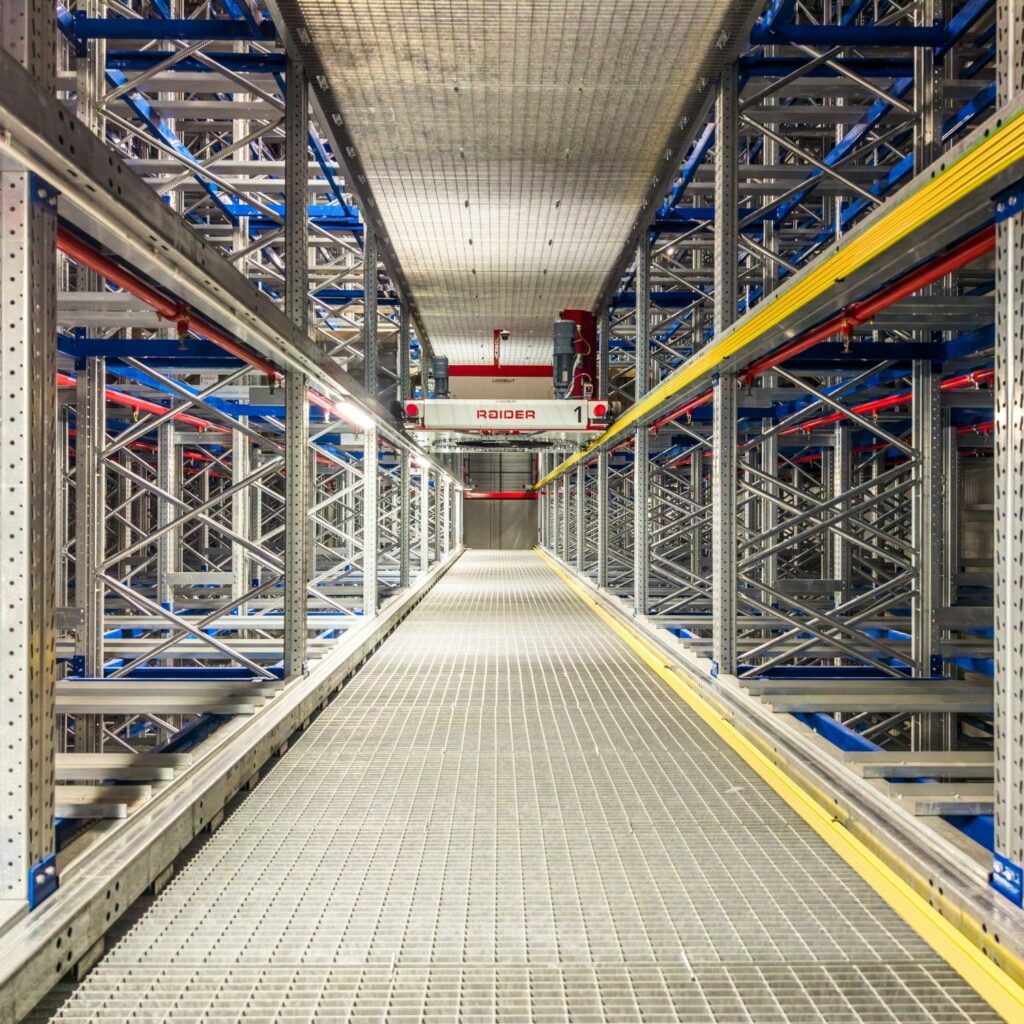
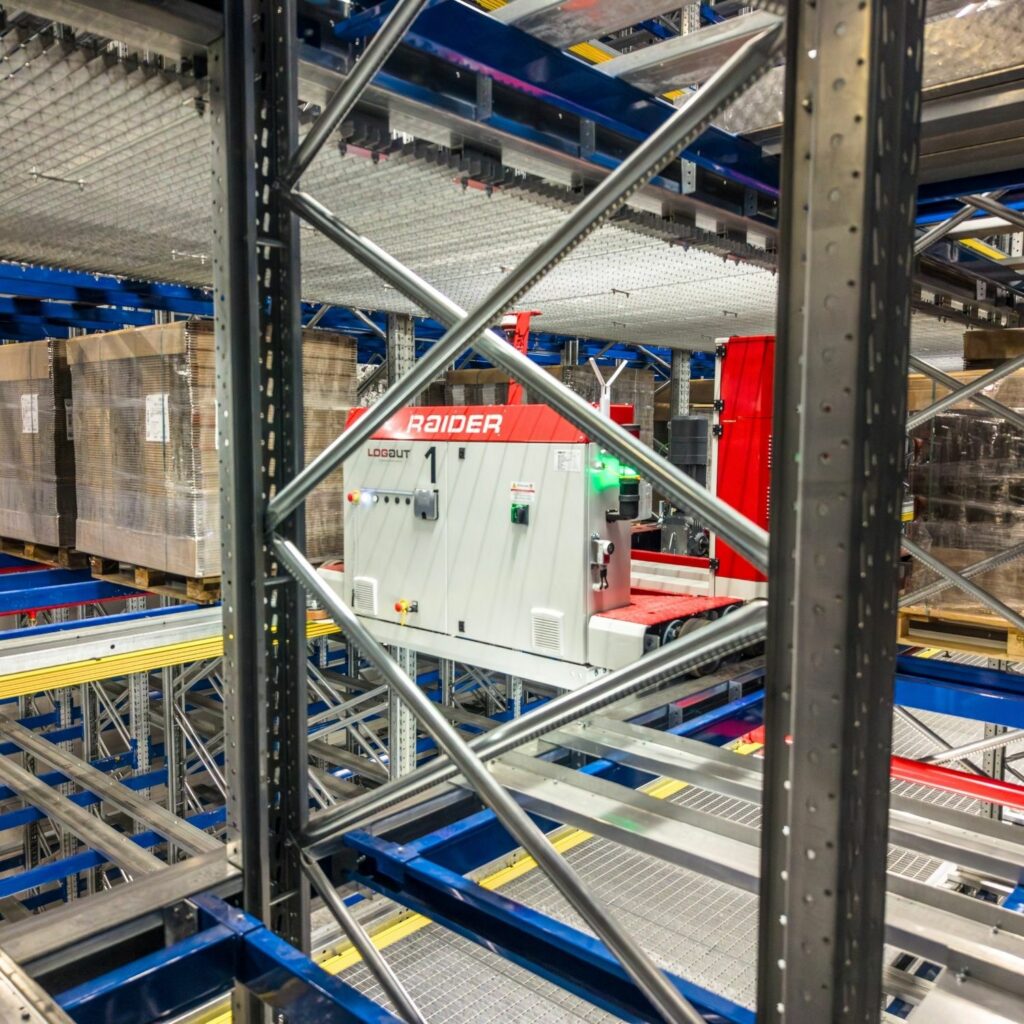
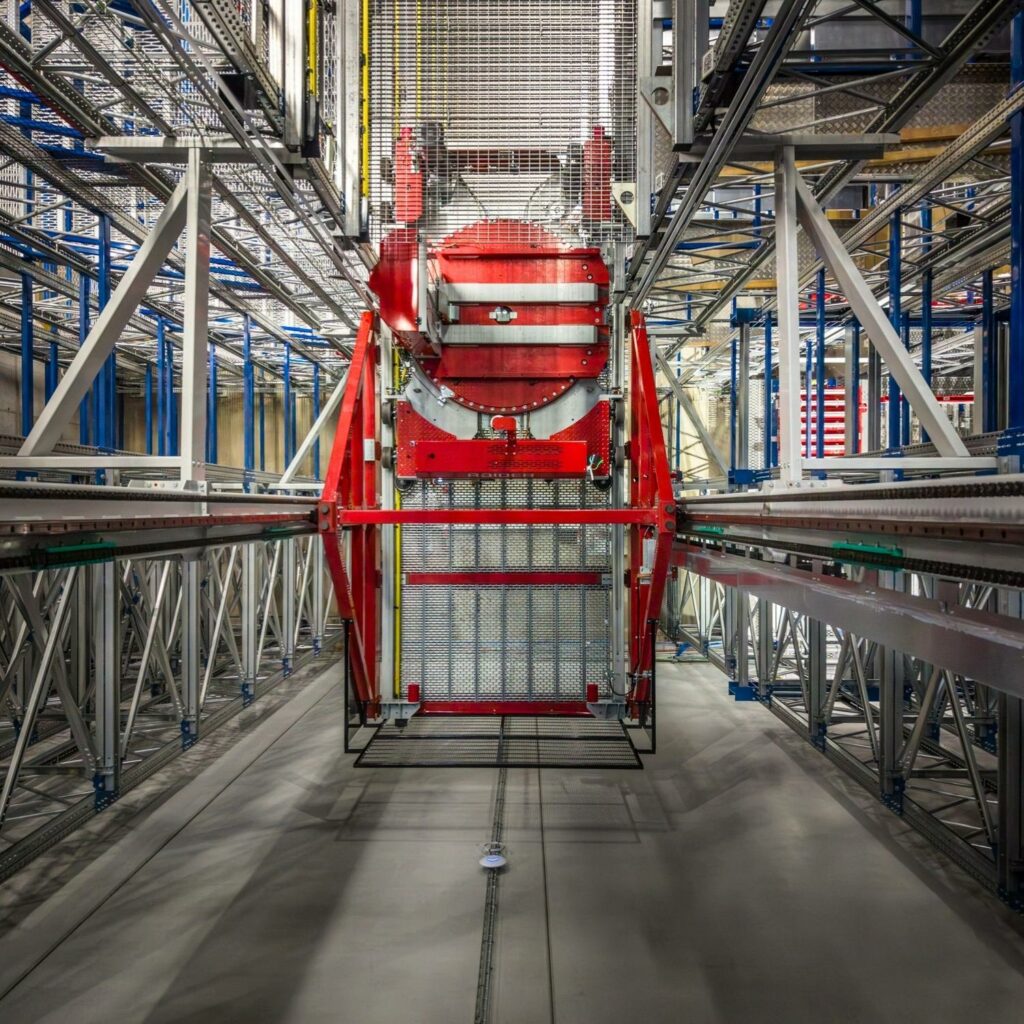
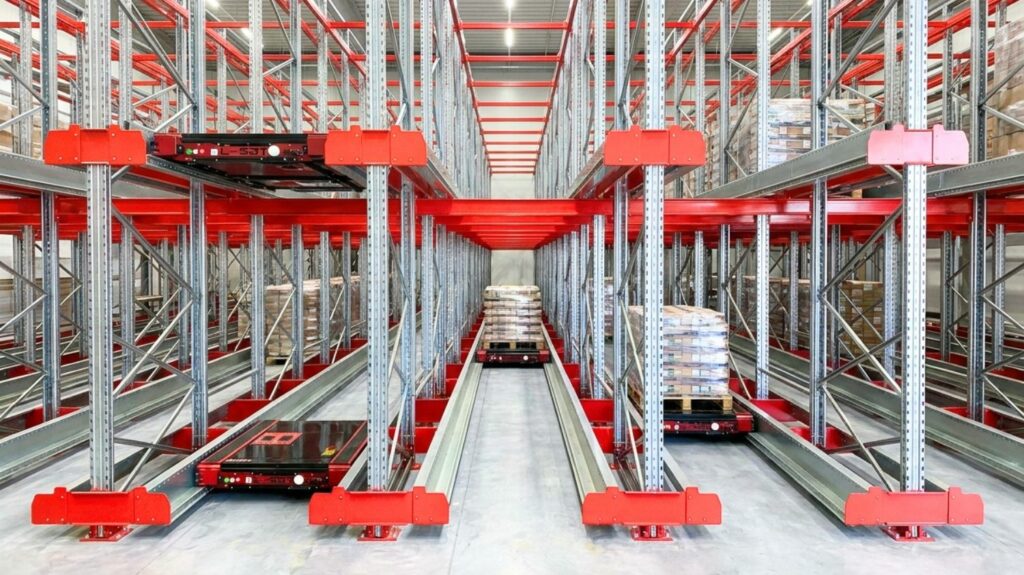
A high-density automated storage solution combining autonomous shuttle technology for deep-lane pallet handling with vertical transfer systems connecting multiple storage levels. Built on a hybrid architecture, Raider® overcomes the limitations of conventional accumulation systems, enabling intelligent pallet flow management, high storage density and seamless integration with WMS and WCS platforms.
Automated storage solutions based on independent shuttle technology operating across multiple levels, designed for high-density storage and intensive pallet handling. By distributing handling operations across multiple levels, shuttle systems improve throughput, reduce cycle times and ensure high levels of operational continuity.
Automated storage solutions designed to maximise vertical space utilisation while providing ergonomic access to stored materials.
By concentrating storage capacity within a compact footprint, vertical storage systems improve operational efficiency, optimise inventory management and make better use of available space.
Automated storage systems designed for totes, bins and lightweight loads, combining high storage density with fast and accurate retrieval operations. Particularly suited to environments with a large number of SKUs and picking-intensive operations, Miniload systems improve order fulfilment efficiency while ensuring precise inventory control.
Warehouse Engineering is Modulblok’s magazine dedicated to the industrial culture of modern intralogistics—an editorial platform focused on understanding and interpreting the transformations shaping today’s warehouse systems. Through technical insights, industry analysis and expert contributions, the magazine explores the technologies, operating models and specialist expertise that are redefining the role of logistics across industrial and distribution environments. Its purpose is to provide a structured perspective on the industry, connecting technological innovation with the engineering principles that underpin the design, performance and evolution of warehouse systems.
Describe your needs: our technical team will analyze the information to understand the operational context and provide you with feedback as quickly as possible.