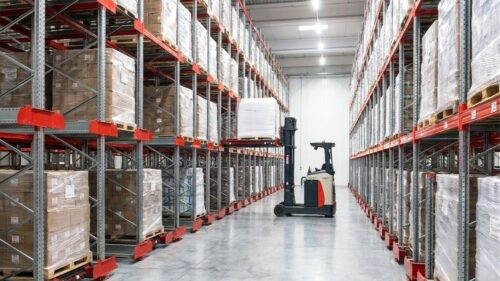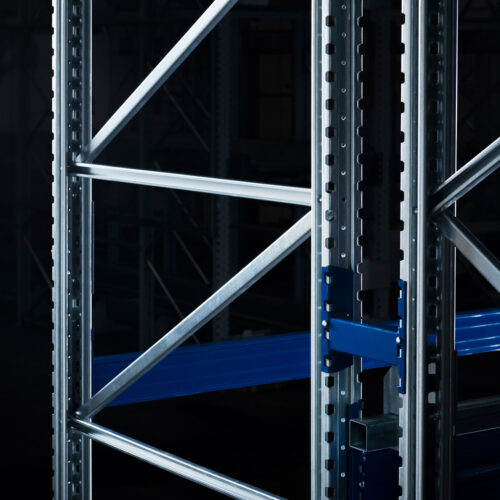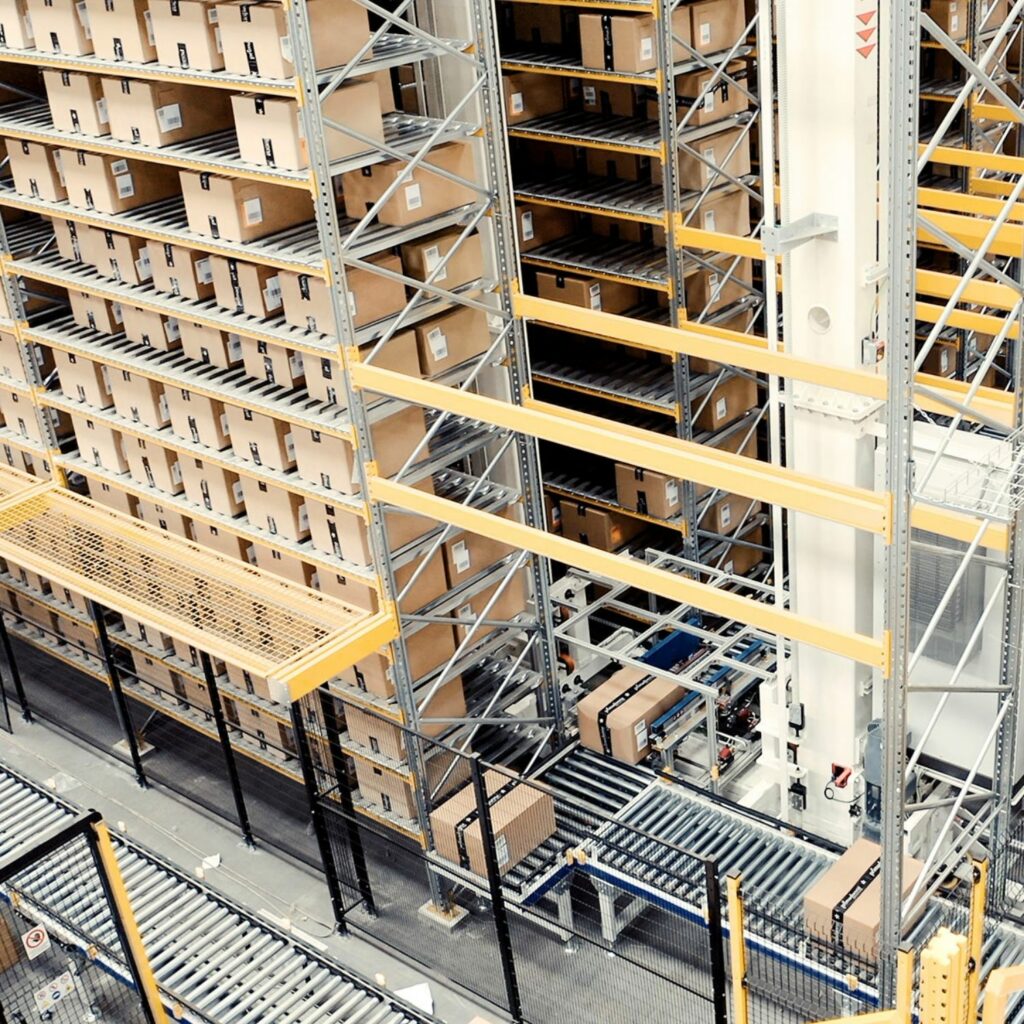
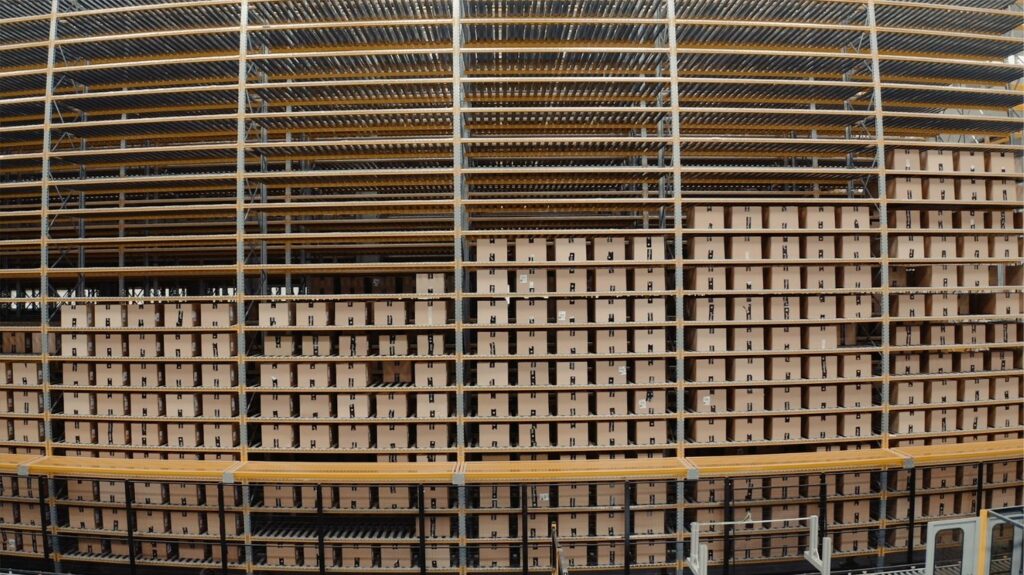
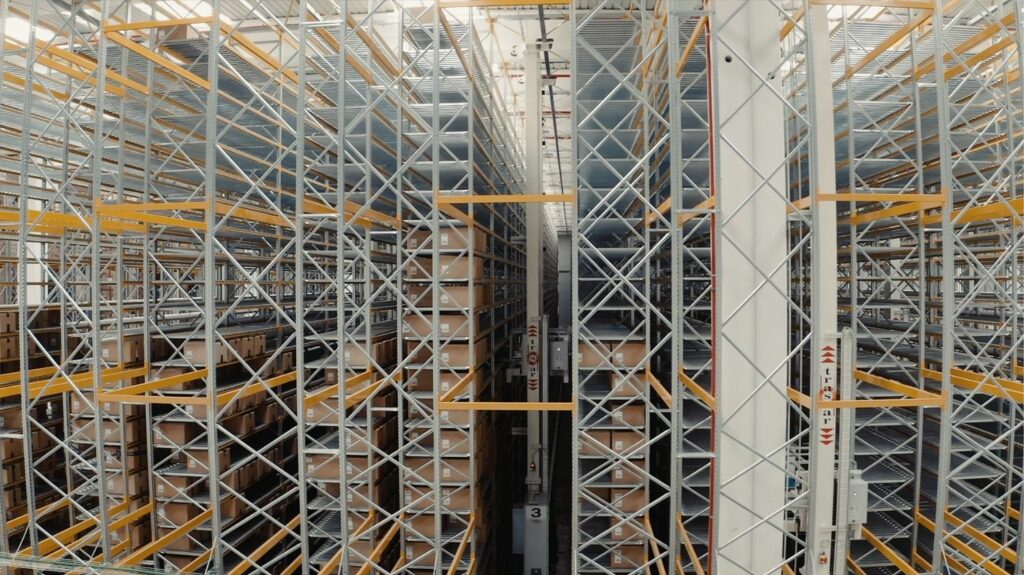


Automated case-handling warehouses are intralogistics systems designed for the automated storage and handling of lightweight load units, such as totes, bins and trays, in environments characterised by a high number of SKUs and fast-moving operations. In these applications, complexity is driven not by volume alone, but by the need to manage thousands of product references simultaneously while ensuring rapid access, picking accuracy and complete traceability of material flows. The warehouse therefore becomes a high-density system where space utilisation and handling speed are critical drivers of overall performance. Automated case-handling solutions support highly compact storage configurations, with structures reaching heights of up to approximately 25 metres. Through dedicated racking systems and specialised load supports, they maximise the use of available volume while maintaining high throughput and operational efficiency. Single-deep and multi-deep configurations can be implemented according to project requirements, with Miniload systems capable of handling load units weighing up to 100 kg.
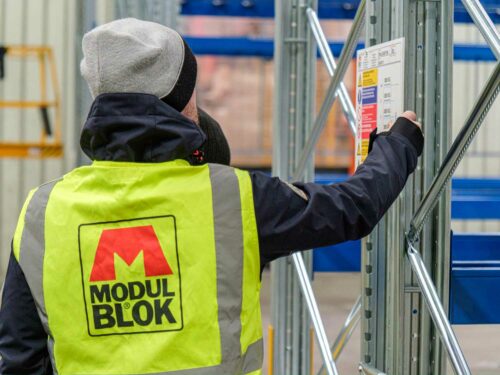
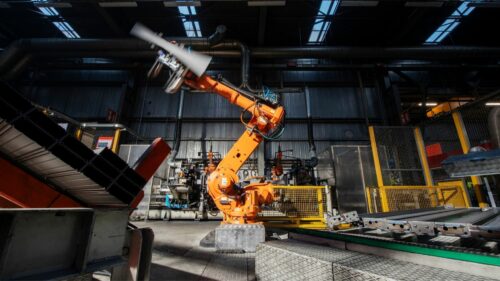
These systems can operate across a wide range of environmental conditions, from ambient-temperature applications to temperature-controlled environments and cold storage facilities down to -30°C, while maintaining reliability and continuous operation. The engineering approach extends beyond the selection of a specific technology. Each project is developed as an integrated system in which structure, automation and software operate in coordination. To achieve this, Modulblok works alongside leading automation specialists in case-handling solutions, selecting the technologies best suited to the characteristics of the material flows, the required throughput levels and the degree of automation needed for each application.
01
In environments where high productivity must be combined with efficient use of available space, automated case-handling warehouses deliver consistent performance and long-term scalability.
The vertical development of the storage structure, reaching heights of up to approximately 25 metres, maximises storage density, while direct access to individual load units ensures fast retrieval times and uninterrupted operational flows.
02
The management of cases and lightweight load units requires storage systems capable of supporting a wide range of operational configurations, from spare parts warehouses and order-picking areas to integrated transport systems and production environments.
In these applications, a standardised approach is rarely effective. System design must be driven by a detailed analysis of products, material flows and operational processes in order to develop a solution that remains adaptable over time and can evolve alongside changing business requirements.
03
In high-intensity logistics environments, the speed, accuracy and reliability of material handling operations have a direct impact on overall warehouse performance.
The integration of Miniload systems, dynamic conveyor technologies and warehouse control software enables high throughput levels while reducing inefficiencies and providing greater visibility and control across the entire material flow process.
Automated case-handling warehouses are built around a range of configurable technologies selected according to material flows, facility layout and the required level of automation. Each solution is engineered to match the specific operational requirements of the application, ensuring the most effective balance of storage density, throughput, accessibility and system performance.
Automated storage systems based on Miniload stacker cranes designed for the handling of totes, bins and lightweight load units. They provide high-speed storage and retrieval operations, ensuring accuracy, reliability and efficient management of high-turnover inventory.
Compact automated storage solutions that maximise vertical space while providing ergonomic access to stored items. They optimise the use of available floor space and are particularly suited to environments with limited footprint and a high number of SKUs.
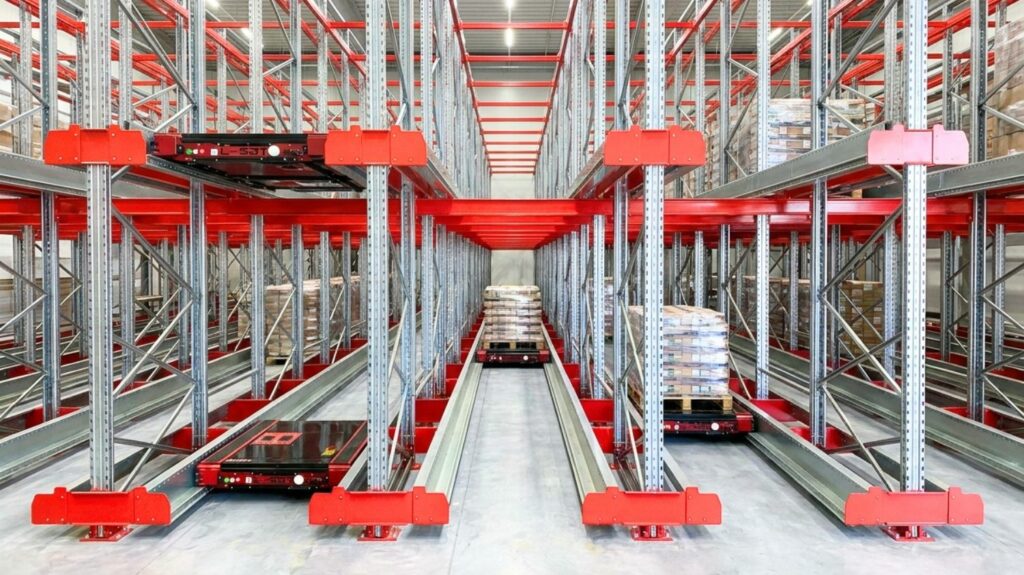
Multi-level automated storage systems equipped with autonomous shuttle vehicles dedicated to load handling operations. They offer exceptional scalability and are particularly well suited to applications characterised by intensive, high-throughput and dynamic material flows.
Warehouse Engineering is Modulblok’s magazine dedicated to the industrial culture of modern intralogistics—an editorial platform focused on analysing and interpreting the transformations reshaping today’s warehouse systems. Through technical insights, industry analysis and expert contributions, the magazine explores the technologies, operating models and specialist expertise that are redefining the role of logistics across industrial and distribution environments. Its purpose is to provide a structured perspective on the industry, connecting technological innovation with the engineering principles that drive the design, performance and evolution of warehouse systems.
Describe your needs: our technical team will analyze the information to understand the operational context and provide you with feedback as quickly as possible.