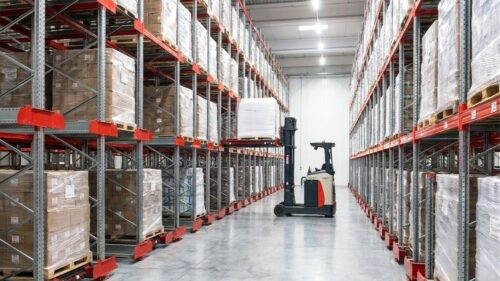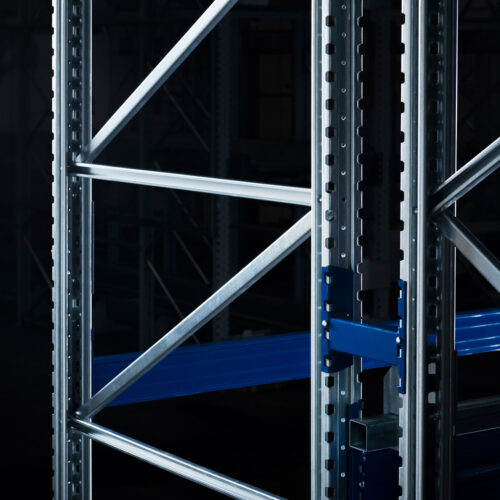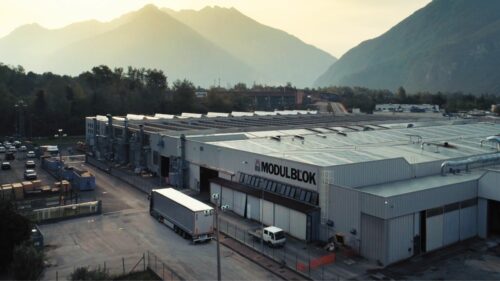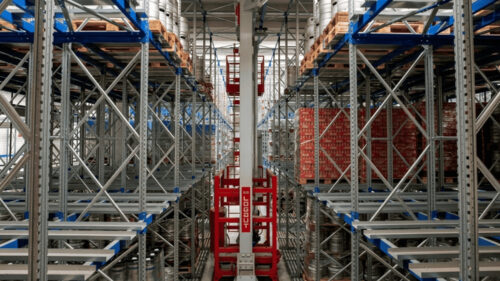

For decades, the Netherlands has been one of Europe’s most advanced logistics laboratories. Today, companies are facing a new generation of constraints: energy availability, planning restrictions, sustainability requirements and growing labour shortages. Ronald Meijer, owner of Zeus Magazijninrichting and a Modulblok partner for more than twenty-five years, explains how these factors are reshaping the way warehouses are designed and operated.
For more than twenty-five years, Zeus Magazijninrichting has been Modulblok’s key partner in the Netherlands. The partnership has grown through hundreds of projects, underpinned by a shared approach focused on tailored solutions and the management of complex applications. Today, looking at the Dutch market offers an early insight into many of the transformations reshaping logistics across Europe.
For many years, logistics growth was closely linked to the availability of additional space. As volumes increased, new warehouses were built; when storage capacity was no longer sufficient, existing facilities were expanded. In the Netherlands, this model is showing its limitations with increasing clarity.
“Today, many companies are able to obtain permits for new buildings but cannot always secure the energy capacity required to operate them,” says Ronald Meijer, owner of Zeus Magazijninrichting. “In some cases, connection to the power grid can take several years.”
In one of Europe’s most advanced logistics markets, energy availability is becoming a decisive factor in new investments and expansion plans. This challenge is compounded by increasing pressure to limit land use and by the electrification of transport, which requires ever more capable infrastructure.
Against this backdrop, warehouse design is taking on a different meaning. It is no longer simply about increasing storage capacity, but about making more efficient use of increasingly limited resources.
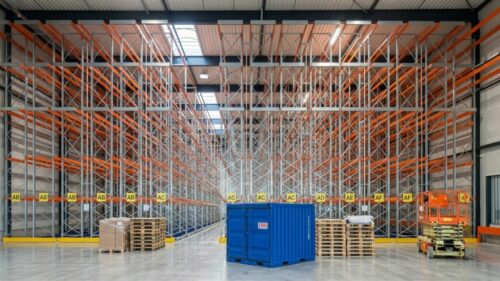
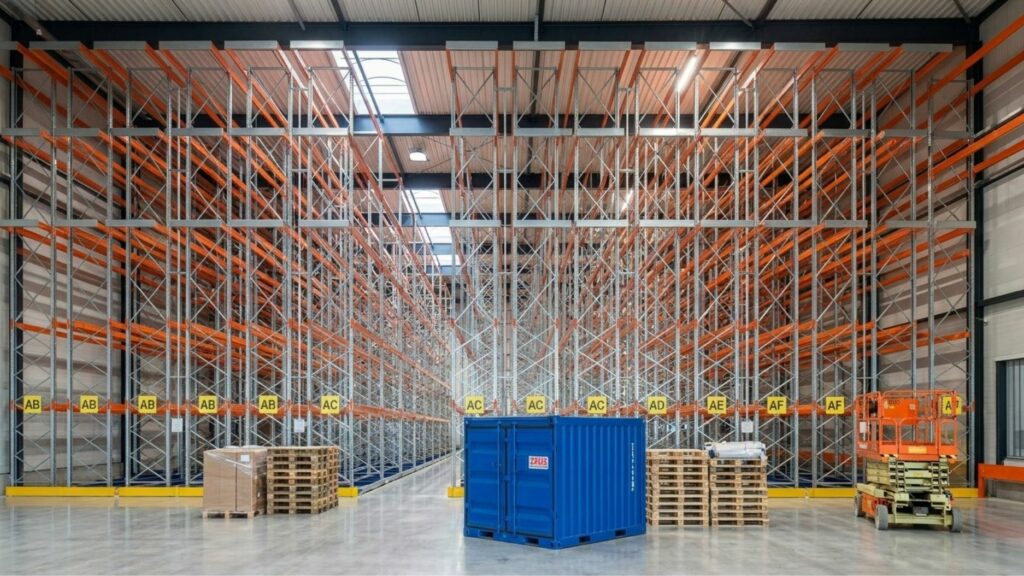
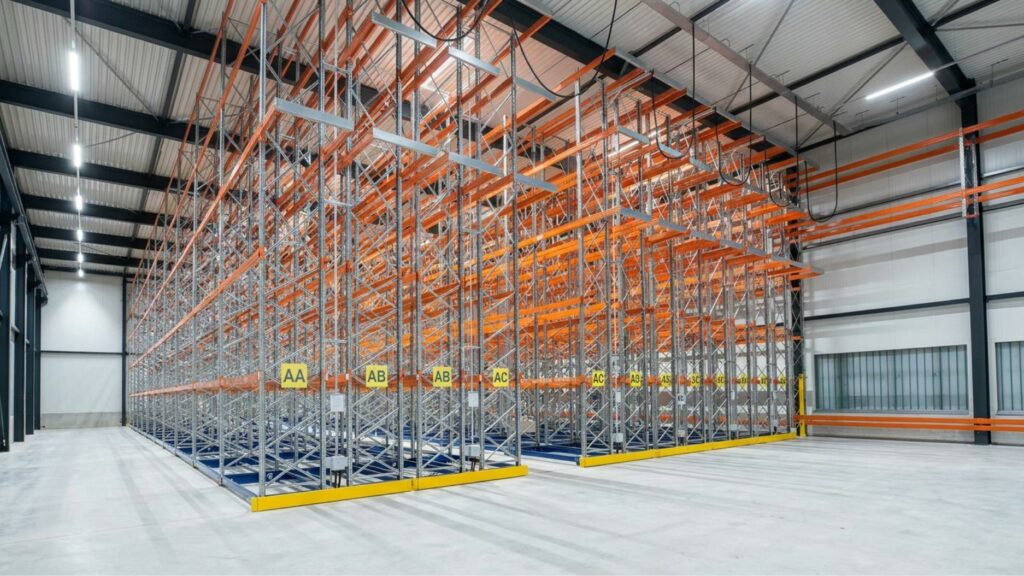
| Voce | Valore | |
|---|---|---|
| Tipologia impianto | Magazzino portapallet su basi mobili | |
| Capacità di stoccaggio | Circa 3.885 posti pallet | |
| Altezza impianto | 10.068 mm | |
| Lunghezza delle file mobili | Circa 40 m | |
| Portata massima per fila mobile | 417.200 kg | |
| Portata massima per coppia di correnti | 3.200 kg |
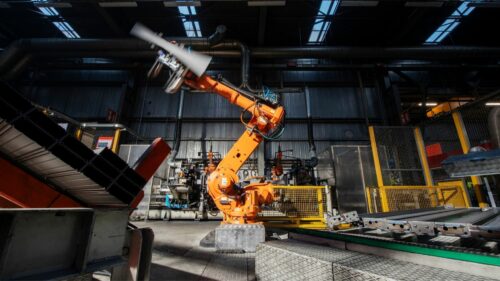
Alongside space optimisation, automation represents another key area of development. In the Netherlands, difficulties in recruiting skilled workers are also accelerating the adoption of automated forklifts, AGVs and autonomous material handling systems.
According to Ronald Meijer, this transformation is influencing even seemingly minor design decisions. In one project developed with Toyota Nederland, for example, the clear width of the pallet locations was increased to provide the greater operating tolerances required by automated vehicles. “You lose a few pallet locations, but gain speed, reliability and operational continuity.”
This approach reflects a broader shift: maximising storage density is no longer the sole design criterion. Factors such as workforce availability, productivity, automation and material flow management are playing an increasingly important role.
The Dutch experience offers an insight that extends far beyond a single project. When space, energy, labour and sustainability become limited resources, value no longer lies solely in supplying a storage structure. What becomes decisive is the ability to interpret complex constraints and transform them into effective operational solutions. This is why, in more mature markets, competition is gradually shifting from products to engineering expertise. As Ronald Meijer puts it: “In the future, we will sell less steel and more knowledge.” In the most advanced logistics markets, space is no longer the only constraint. Energy, automation, sustainability and the availability of skilled professionals are redefining the way warehouses are designed. In this context, value is progressively shifting from the product itself to the ability to understand complex systems and turn constraints into design opportunities. The Dutch market has been experiencing this transition for years, offering increasingly valuable insights for the rest of Europe.
Describe your needs: our technical team will analyze the information to understand the operational context and provide you with feedback as quickly as possible.