Dismantling and reinstallation of industrial racking systems: when reuse requires inspections and documentation
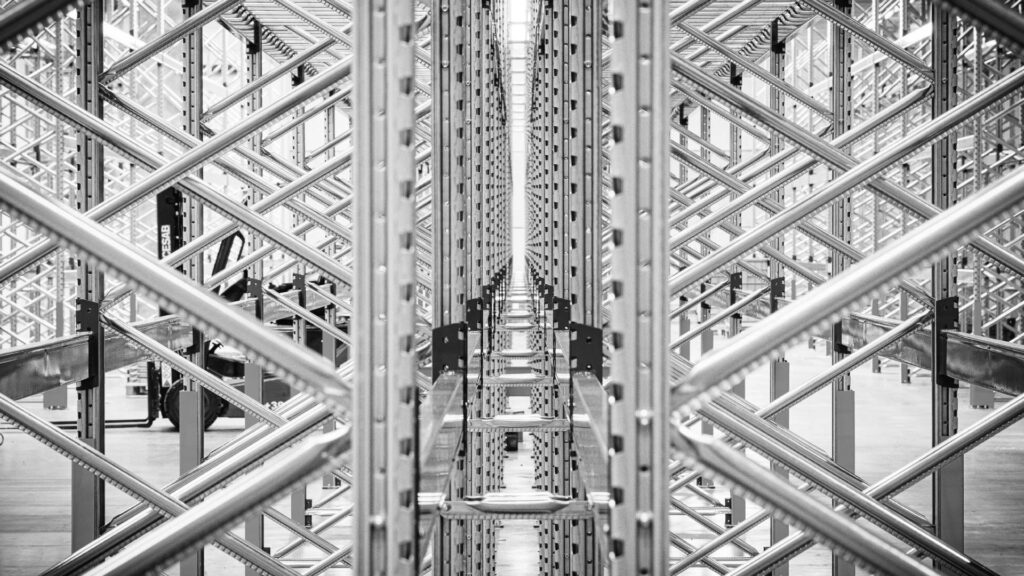
Warehouse relocations, facility expansions, and layout changes are common occurrences in modern logistics operations. As a result, industrial racking systems are frequently dismantled and reinstalled to accommodate evolving operational needs. However, reusing a racking system is never simply a logistical exercise. Without the appropriate inspections, technical assessments, and supporting documentation, what may appear to be a straightforward relocation can quickly become a source of technical, regulatory, and insurance-related risk.
Dismantling and reinstallation: reuse is not a neutral process
Warehouse relocations, logistics reconfigurations, or the purchase of used industrial racking systems may appear to offer a cost-effective solution. In reality, the dismantling and reinstallation of industrial racking should be managed as a structural intervention in its own right. The configuration changes, operating conditions evolve, and responsibilities may shift accordingly.
Without proper planning and technical assessment, the result can be non-compliance, operational downtime, and significant issues in the event of inspections, audits, or insurance claims..
When reinstallation is treated as a “new installation”
.
Reusing a dismantled industrial racking system—or a system purchased on the second-hand market—requires more than simply reassembling it in its original configuration. Before it can be returned to service, a number of technical and documentation requirements must be verified to ensure that the installation remains safe, compliant, and fit for its intended use.
Three requirements for safely reusing industrial racking systems
Documentation and system traceability
Before a dismantled or second-hand racking system can be reused, adequate documentation must be available to reconstruct its key characteristics, including:
- mechanical properties of the components;
- component type and product series;
- original configuration and layout;
- load capacities, drawings, calculations, and any available declarations or technical documentation.
It is equally important to ensure the correct identification of uprights, beams, bracing members, accessories, and anchoring systems in order to prevent the use of incompatible or incorrectly mixed components.
Without sufficient traceability, reuse becomes problematic because the required structural performance can no longer be reliably demonstrated.
Structural suitability assessment and, where required, seismic verification
A structural assessment should always be carried out based on the actual conditions of the new installation, taking into account:
- revised layouts;
- different installation heights;
- new load requirements;
- changes in load units or pallet types;
- potential interactions with other warehouse systems or equipment.
Where required by regulations or site conditions, the assessment should also include seismic verification, considering the location of the installation and the applicable seismic classification.
The objective is to confirm that the system’s strength, stiffness, and deformation behaviour remain suitable for the new operating environment. Damage assessment and refurbishment before reinstallation
All components should be inspected before reassembly to identify:
- deformation;
- forklift impact damage;
- racks;
- corrosion;
- damage to anchors and safety devices.
Any anomalies should be classified and addressed through appropriate corrective measures. Depending on the nature and severity of the damage, this may involve either repair, where permitted, or replacement of components that no longer meet the required performance criteria.
Reinstallation should only proceed once the necessary safety and performance conditions have been restored, ensuring that inherited defects do not become operational risks after the system returns to service.
Planning a warehouse relocation or racking reinstallation project?
If you are preparing to dismantle and reinstall an industrial racking system—or relocate an entire warehouse—Modulservice can support you with preliminary technical assessments, structural verification, and documentation reviews.
A structured approach helps ensure that the installation can be safely returned to operation while meeting the applicable safety, performance, and compliance requirements.
Read more news

Request a technical consultation
Describe your needs: our technical team will analyze the information to understand the operational context and provide you with feedback as quickly as possible.