MATERIAL HANDLING TECHNOLOGIES
Automated pallet shuttle systems
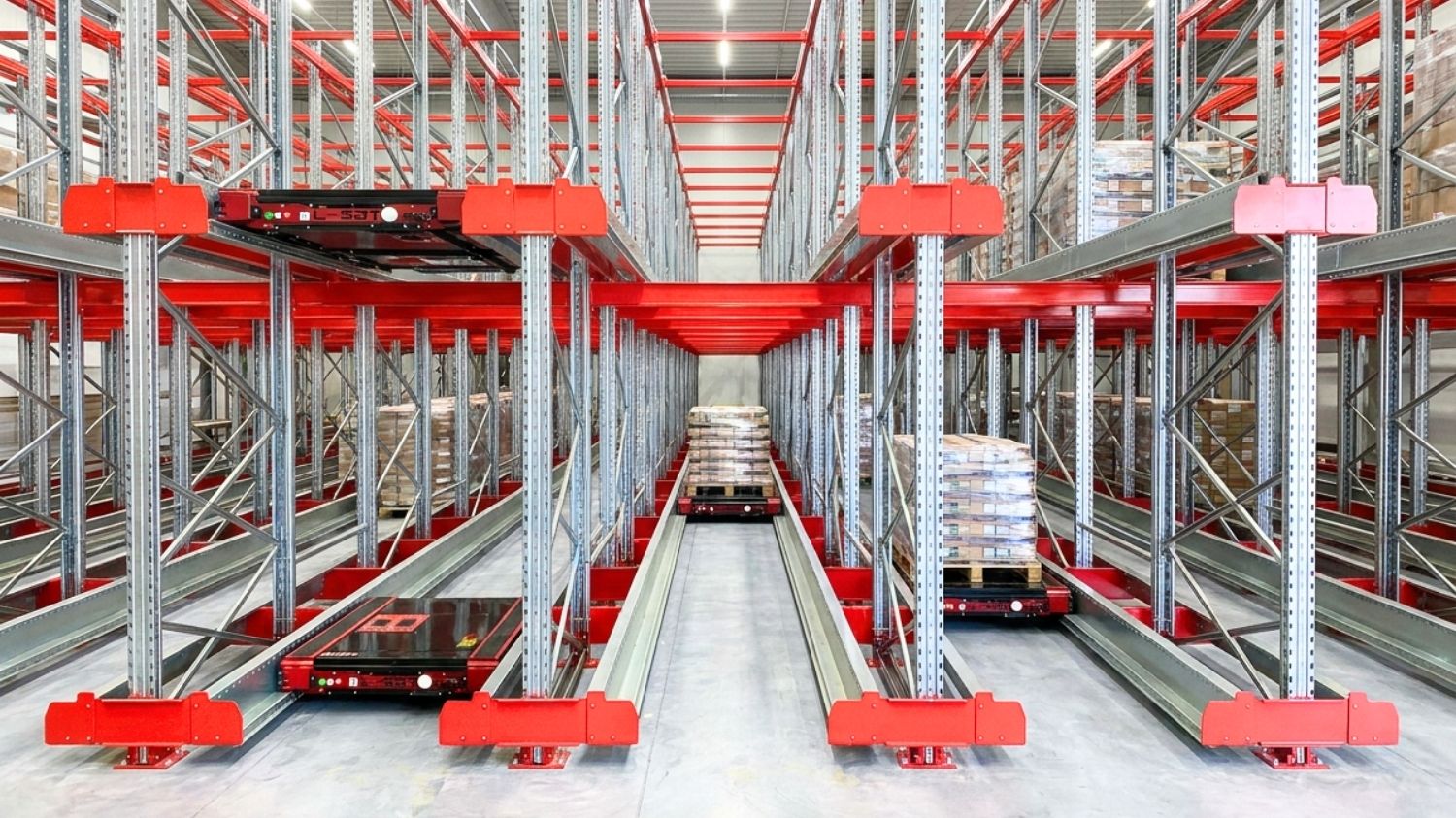
Shuttle technology automates pallet movements within multi-depth storage channels, reducing forklift travel and increasing overall warehouse storage density.
The shuttle operates autonomously within the storage channels, while the operator is responsible only for pallet loading and retrieval activities. From semi-automated systems to fully automated architectures, shuttle technology enables a progressive approach to automation while maintaining a high degree of operational flexibility.
Shuttle systems for multi-depth storage
Pallet shuttle systems are material handling solutions designed for the automated or semi-automated management of high-density, multi-depth storage warehouses. The operating principle is based on the use of a motorised shuttle that operates autonomously within the storage channels, transporting load units to their assigned positions according to the warehouse operating logic. In semi-automated configurations, the shuttle is transferred between channels by a forklift truck. The operator therefore remains focused on pallet loading and retrieval activities at the aisle entrance, while the system automates movements within the storage channels, reducing operating times, travel distances and the risks associated with manoeuvring inside traditional drive-in racking systems.
Multi-level shuttle systems for high-density warehouses
In fully automated configurations, the shuttle is integrated with mother-daughter shuttle systems, stacker cranes or multi-level shuttle solutions, enabling fully automated storage and retrieval operations. In these systems, software, material handling equipment and storage structures operate in a coordinated manner to ensure high operational continuity, flow control and maximum storage density.
The adoption of multi-depth storage systems significantly increases installed storage capacity compared with traditional solutions, optimising both vertical space utilisation and storage channel depth. This approach is particularly effective in warehouses characterised by high storage density, large volumes of homogeneous pallets or the need to reduce internal material handling activities.
.
Where pallet shuttle systems deliver the greatest value
01
High storage density
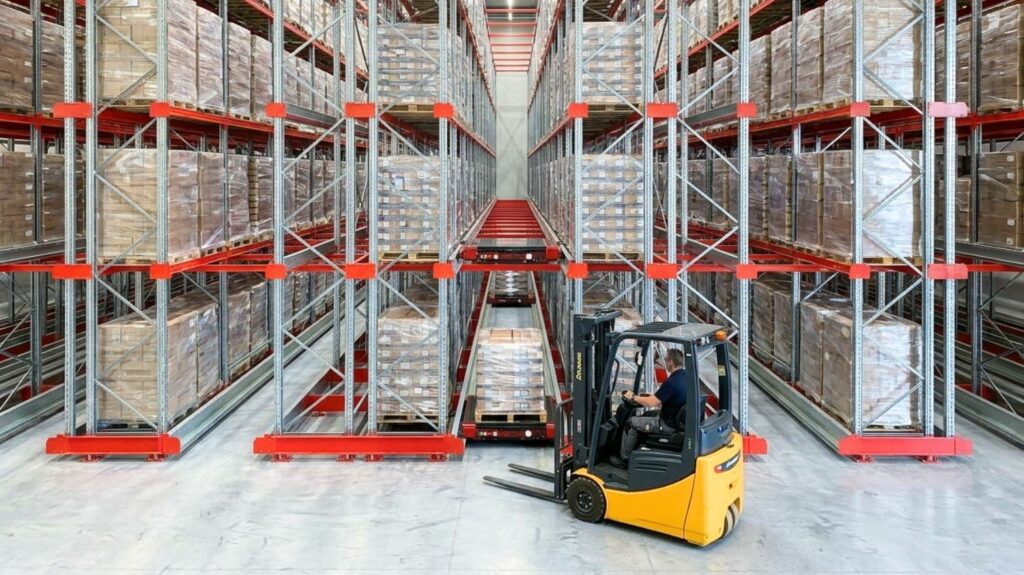
Pallet shuttle systems are designed to maximise storage capacity within a limited footprint by making efficient use of both warehouse depth and height. By eliminating internal aisles within storage blocks, they enable:
- A significant increase in pallet capacity
- Optimised warehouse storage density
- Reduced space dedicated to material handling activities
- High operational reliability, even in high-density storage environments
02
Progressive automation
Shuttle technology enables the development of modular and scalable automation paths that can evolve alongside logistics flows and production requirements. Semi-automated systems often represent the first step towards fully automated configurations, allowing companies to:
- Gradually increase the level of automation
- Maintain a high degree of operational flexibility
- Minimise the impact on existing infrastructure
- Plan future expansions in line with business growth and increasing logistics volumes
03
Flow efficiency
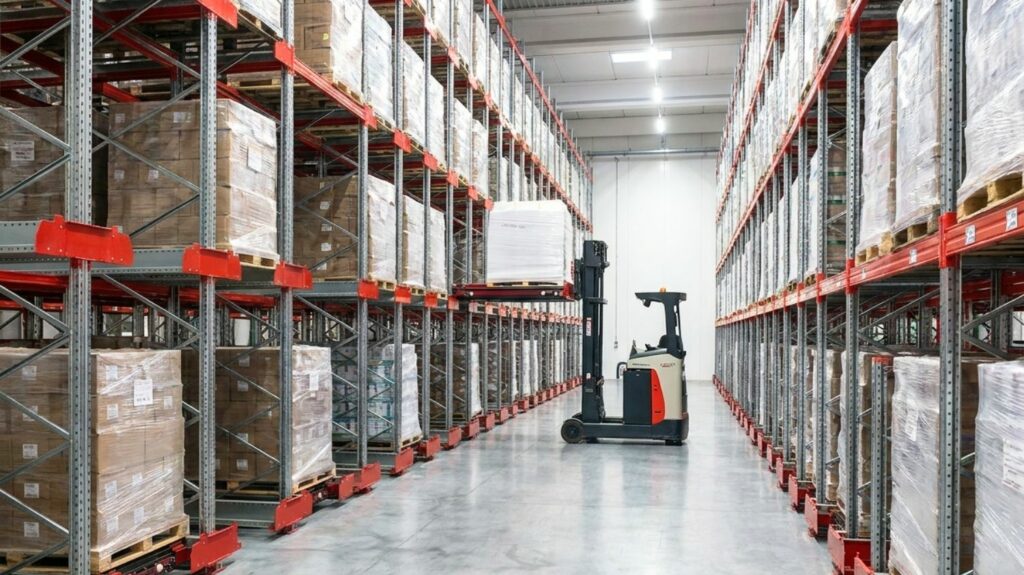
By automating movements within the storage channels, pallet shuttle systems reduce the number of forklift operations and optimise storage and retrieval times. Operators work exclusively at the channel entry points, delivering tangible benefits in terms of:
- Operational continuity
- Logistics flow control
- Safer material handling operations
- Reduced internal travel distances and congestion
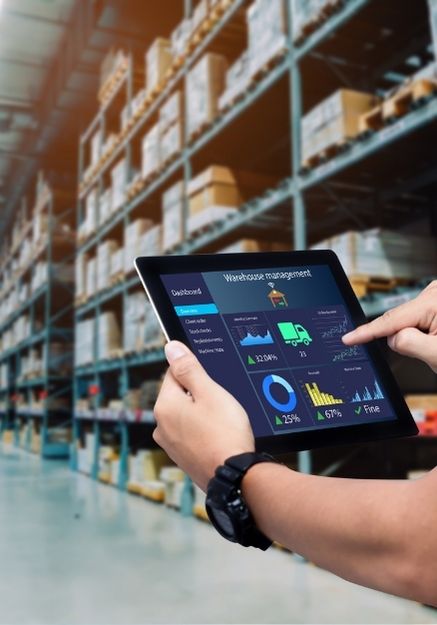
In-house shuttle technologies
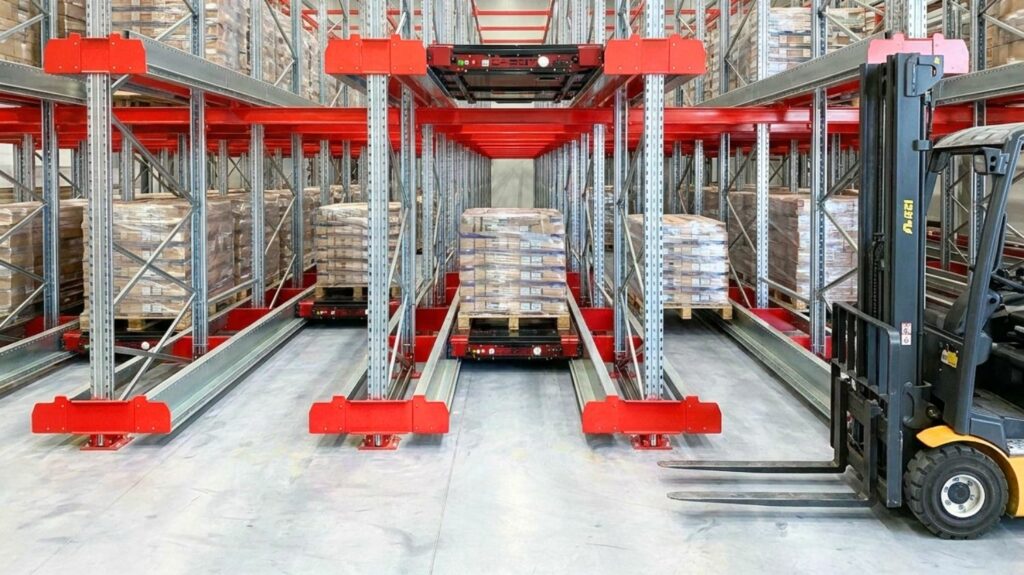
L-SOLE. Ultra-compact shuttle for maximising storage density
L-SOLE represents the evolution of Logaut shuttle technology for high-density storage systems. Designed to accelerate storage and retrieval operations within multi-depth channels, L-SOLE features an ultra-compact design with a height of just 105 mm, among the lowest available on the market. Its compact dimensions allow a greater number of storage levels to be installed within the warehouse, improving vertical space utilisation and maximising available storage volume. The reduced overall dimensions also simplify channel support structures, helping to minimise structural weight and optimise overall system costs.
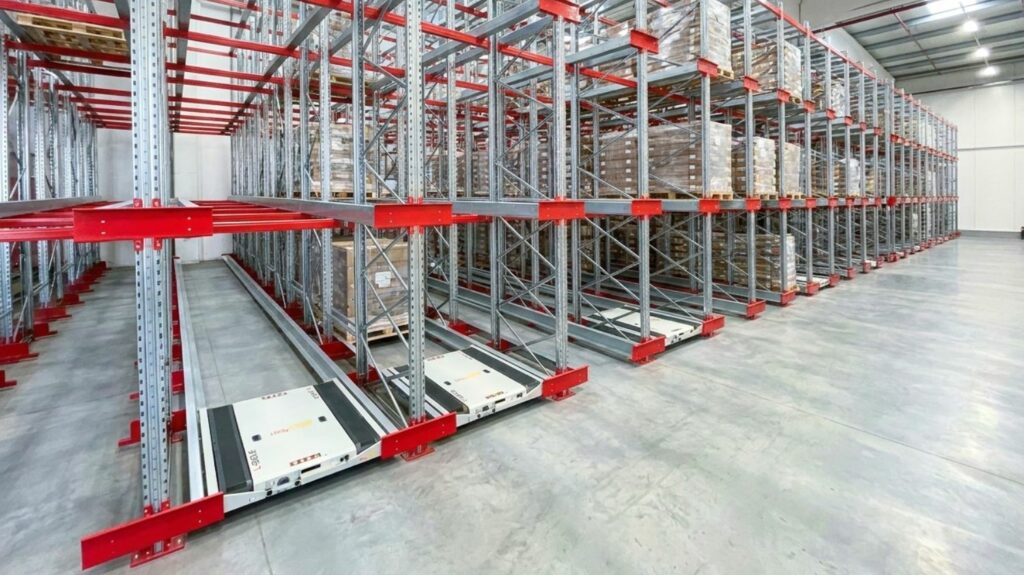
L-SAT. Semi-automated shuttle for high-density drive-in storage systems
L-SAT is Logaut’s semi-automated solution designed for the intensive management of drive-in and multi-depth storage systems. The shuttle operates autonomously within the storage channels, transporting load units to their assigned positions, while transfers between channels are performed using a standard forklift truck. The solution is designed to increase storage density and improve operational productivity without the need for complex automation infrastructure. L-SAT significantly reduces manual movements within the racking system by limiting forklift access to the storage channels, improving safety, operational speed and flow continuity.
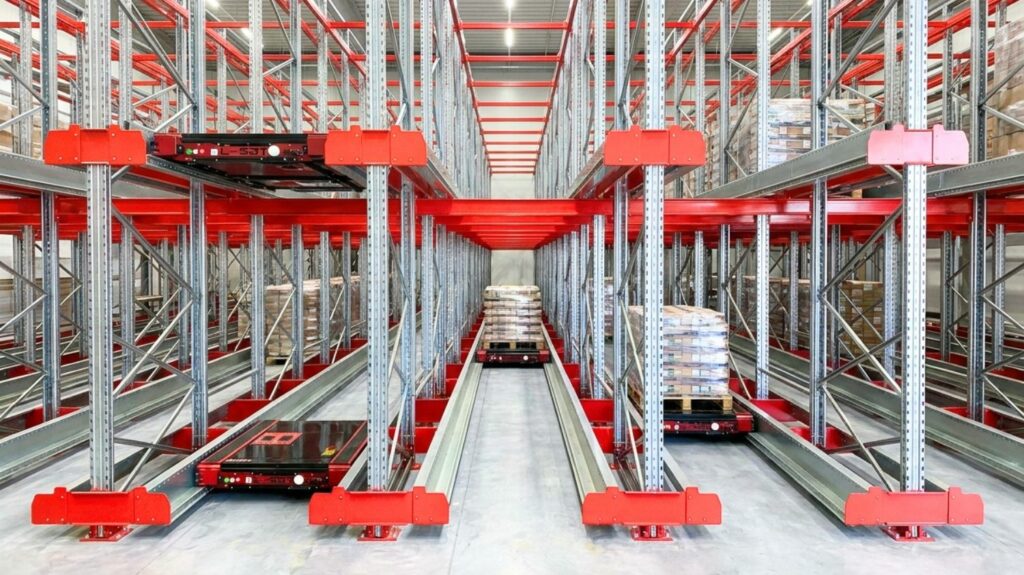
Warehouse Engineering is Modulblok’s editorial platform dedicated to the industrial culture of modern intralogistics. Created to analyse and interpret the transformations shaping today’s warehouse systems, it offers a space for insight, knowledge sharing and industry perspectives. Through technical articles, market analysis and expert contributions, the magazine explores the technologies, operating models and engineering expertise that are redefining the role of logistics across industrial and distribution environments. Its objective is to provide a structured perspective on the sector, connecting technological innovation with storage system design and engineering to better understand the trends, challenges and opportunities shaping the future of warehousing and intralogistics.
Request a technical consultation
Describe your needs: our technical team will analyze the information to understand the operational context and provide you with feedback as quickly as possible.