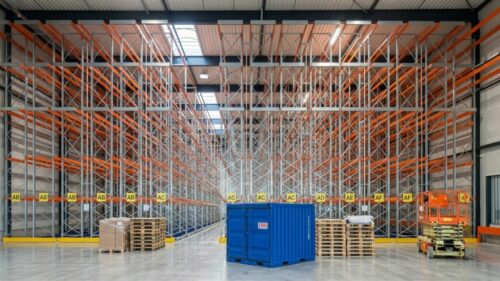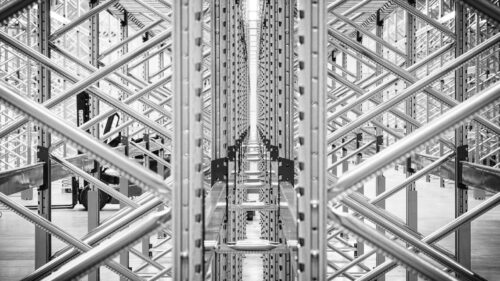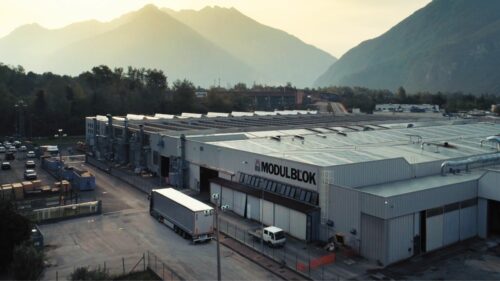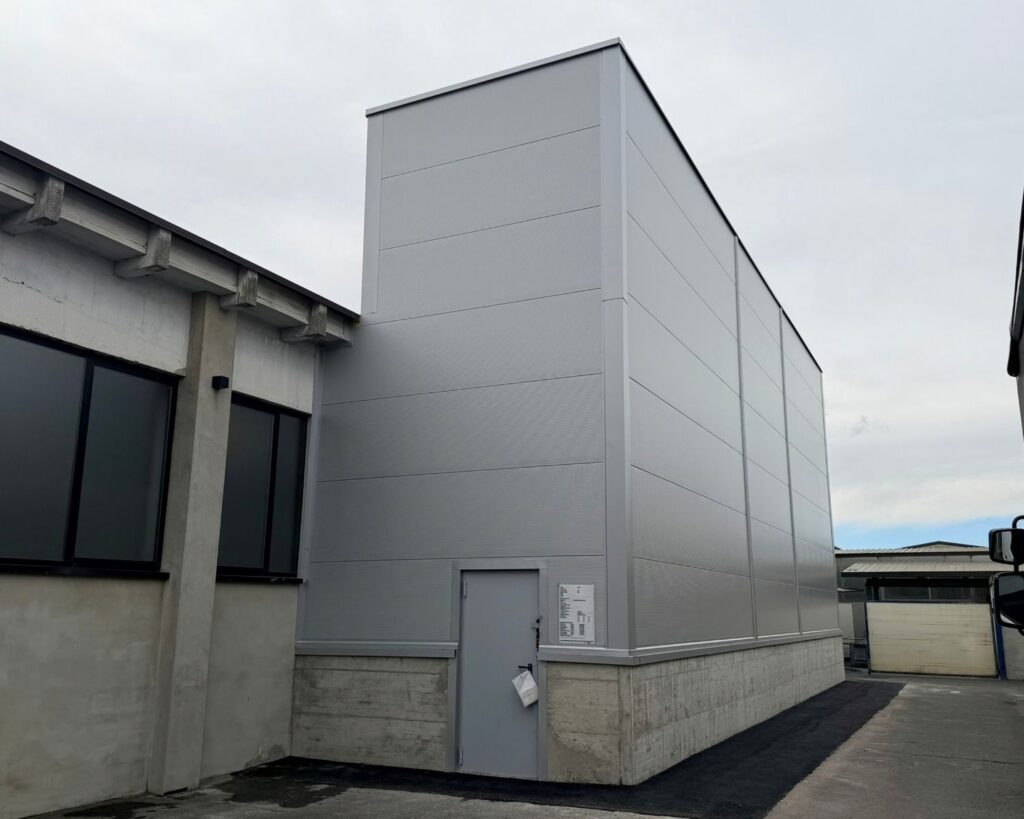
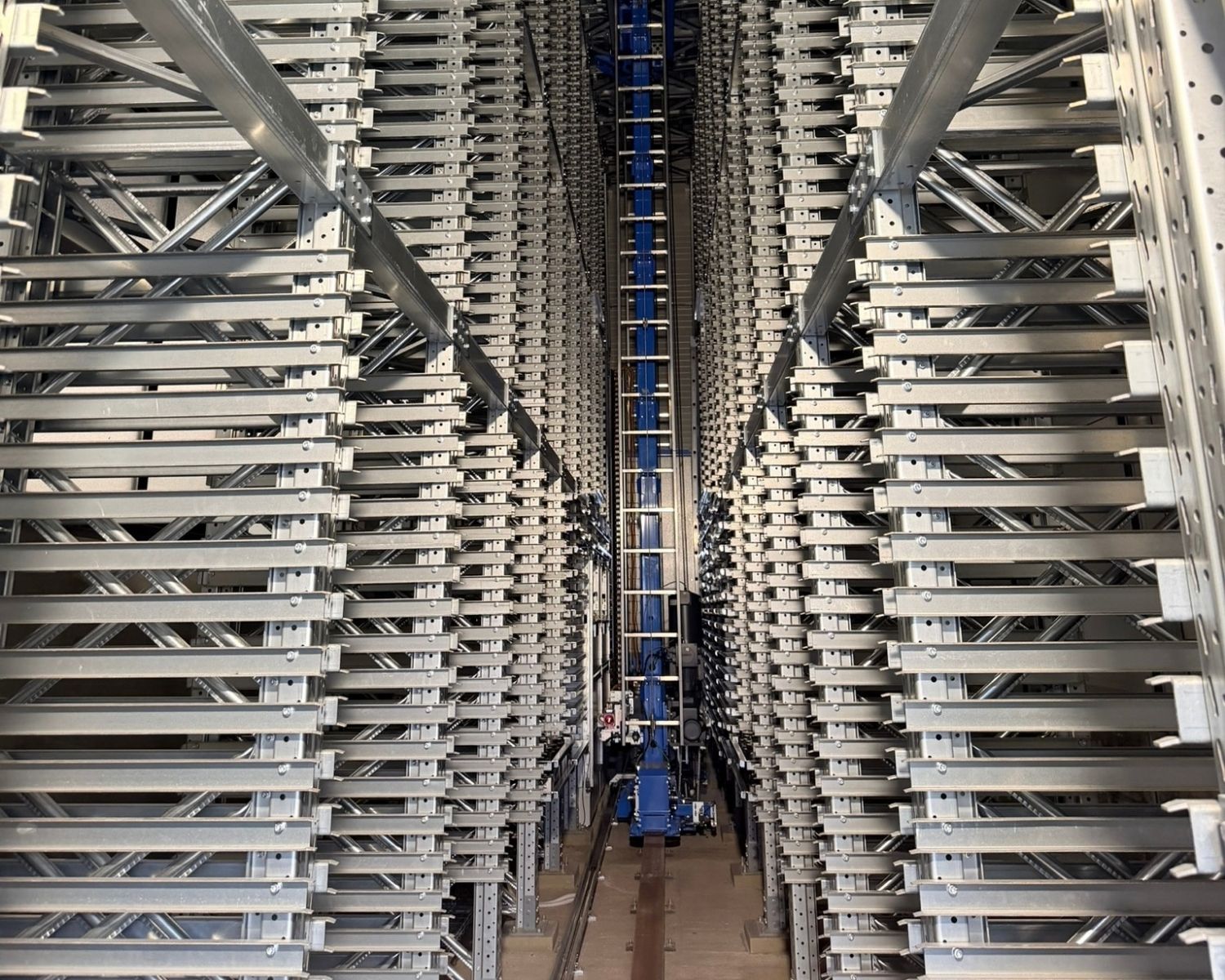
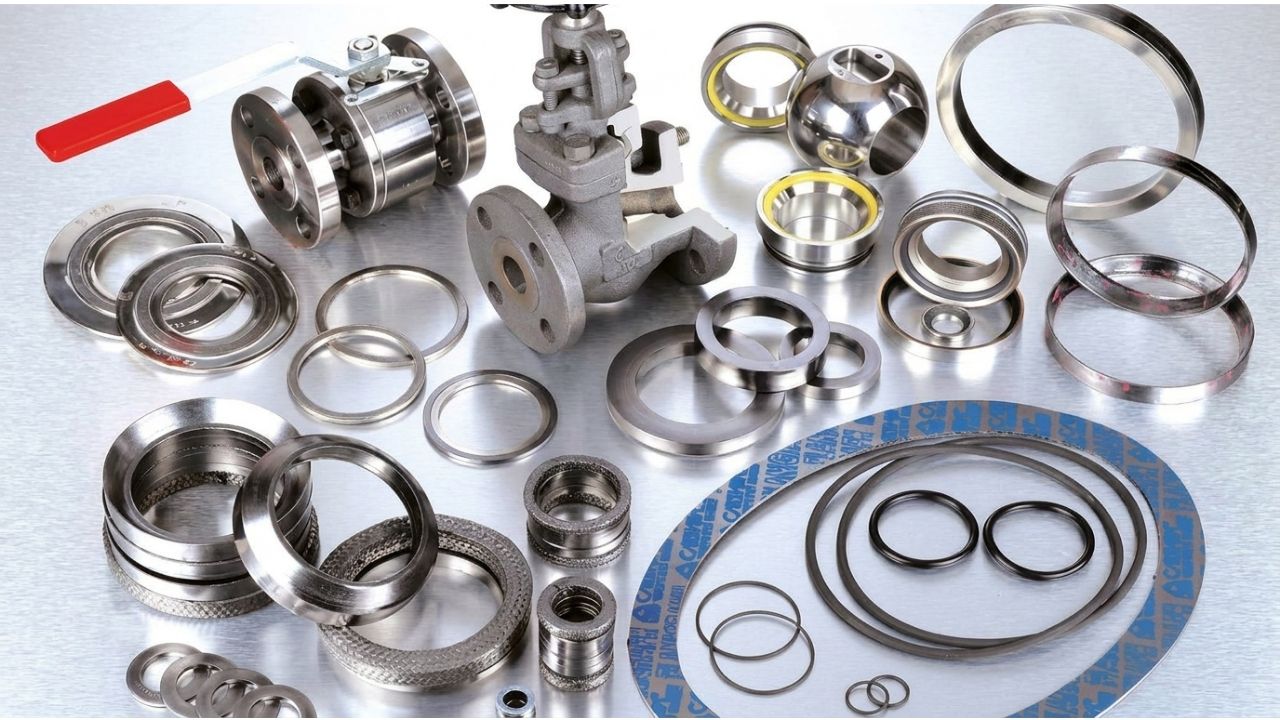

Carrara S.p.A. manufactures valve seals for the chemical and energy industries: a sector in which every new product developed in collaboration with a customer requires a dedicated mold, which belongs to the customer and must remain available for years to come. The tooling warehouse thus becomes one of the few areas of the company with a steady growth curve: it accumulates inventory rather than being depleted, fills up space even before production volumes require it, and turns search time into a widespread cost that is difficult to measure. To address this, the company replaced its end-of-life rotating storage systems with an automated vertical storage system manufactured by Modulblok, installed outside the plant and integrated with the ERP system.
The finished goods warehouse “breathes”: it fills up and empties out in response to demand. The production equipment warehouse does not. In companies that work on a custom basis, every new product developed with a customer generates a mold, a die, or a dedicated tool that enters inventory and never leaves—because the order may be repeated years later and because, often, the equipment isn’t even owned by the company storing it. It’s a monotonically increasing curve, lacking a natural mechanism for reduction. And when it reaches a limit, the first constraint that arises is rarely space: it is access time.
This is the starting point for this case study. Carrara S.p.A. manufactures industrial sealing systems—gaskets primarily intended for the chemical and energy industries—and is one of Europe’s leading players in the sector, with over sixty years of operation and approximately 150 employees at its headquarters in Adro, in the province of Brescia. Its target market consists of valve manufacturers for the Oil & Gas sector, an industry heavily concentrated in Italy. “Valve manufacturers are our primary customers,” explains Sebastiano Carrara, the company’s general manager. “These are companies with deep roots here in the region, and their products are exported all over the world.”
What sets this industry apart is the relationship between the product and the equipment. The gasket is not a standard catalog item: it is tailored to the design of each individual valve, and every dimensional variation results in a new part number. “For every new valve, a gasket with slightly different dimensions is created,” confirms Carrara. “Every size, every type, every item has its own mold: sometimes it’s reused, sometimes it’s dedicated to that single gasket. In any case, the mold is co-developed with the customer, who pays for it, and is effectively their equipment. However, we keep it.”
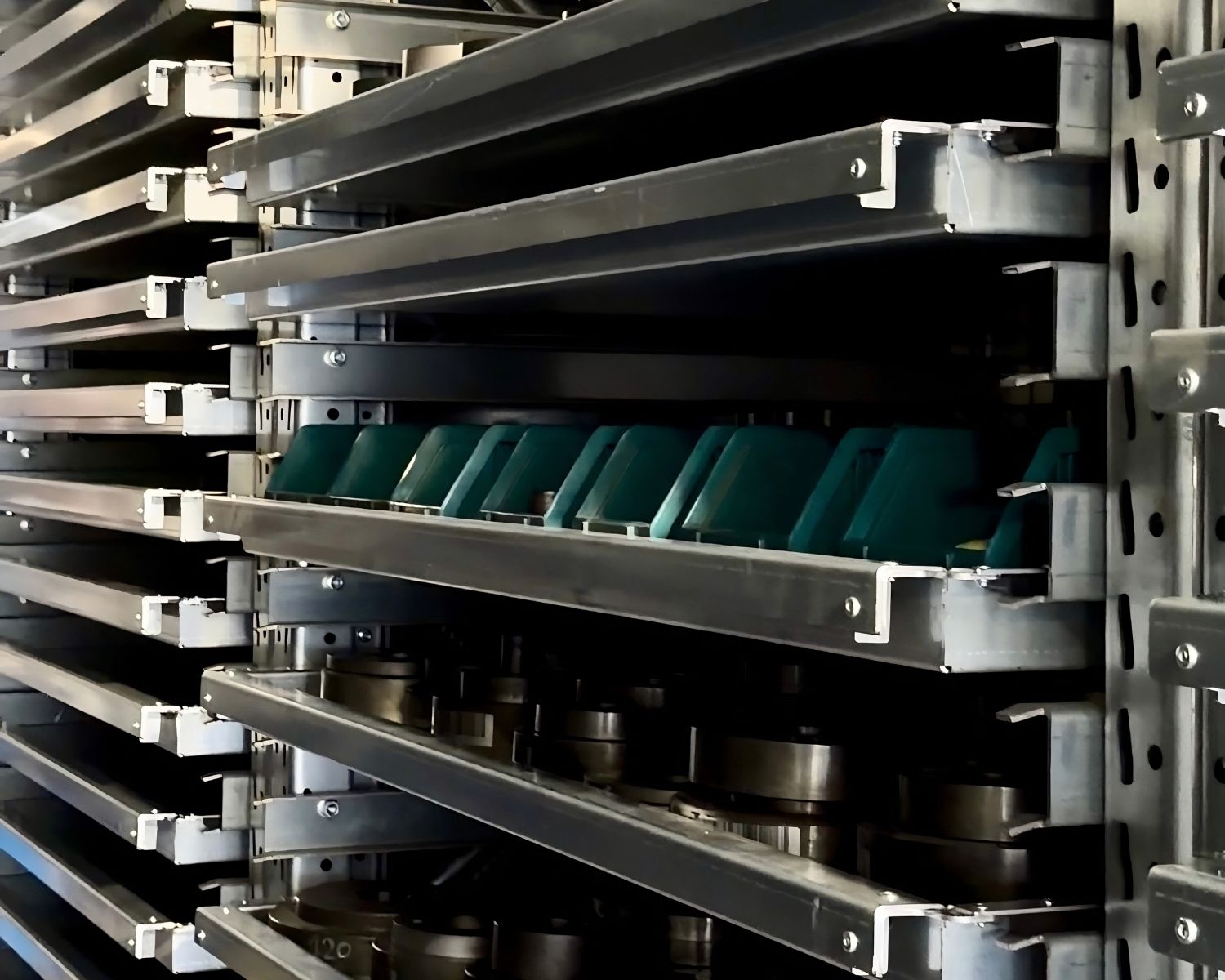
This leads to two operational consequences. The first is volume: the mold inventory grows with the number of part numbers developed, not with production volumes. The second is space requirements: these are heavy pieces of equipment, some of which reach 2,900 millimeters in diameter. “They’re not exactly easy to store,” summarizes Carrara.
The growth of the division dedicated to Oil & Gas gaskets has led to the complete saturation of the equipment warehouse. “The consequence was not only a lack of space but also a gradual increase in management complexity: ever-longer search times, greater difficulty in tracking inventory, and increasingly complex scheduling of warehouse operations. Our goal was not simply to increase storage capacity but to continue growing without that growth translating into greater organizational complexity.”
Compounding this was a technical deadline. Mold storage relied on rotating racks purchased decades earlier that were now nearing the end of their service life. The need to replace them opened a window of opportunity for rethinking the system that would otherwise have been difficult to create: “We combined the practical need to replace them with the challenge of rethinking the organization and management process for the molds.”
The transition from a fleet of rotating carousels to an automated vertical warehouse is often described as a simple technological upgrade. From a process perspective, however, these are two different paradigms.
In the previous model, the logic was distributed: multiple units, each with its own set of equipment, were located at different points throughout the department. “Before, the molds were retrieved one by one from the rotating storage units,” says Carrara. “The operator had to move back and forth without a well-defined pattern: he would retrieve a mold from storage unit 1, move over to 5, retrieve another one, go back to 2, and then return to 5.” With a volume in the range of a hundred retrievals per day, the total time spent on those movements constitutes a significant time cost—and, above all, one that cannot be reduced through organizational measures.
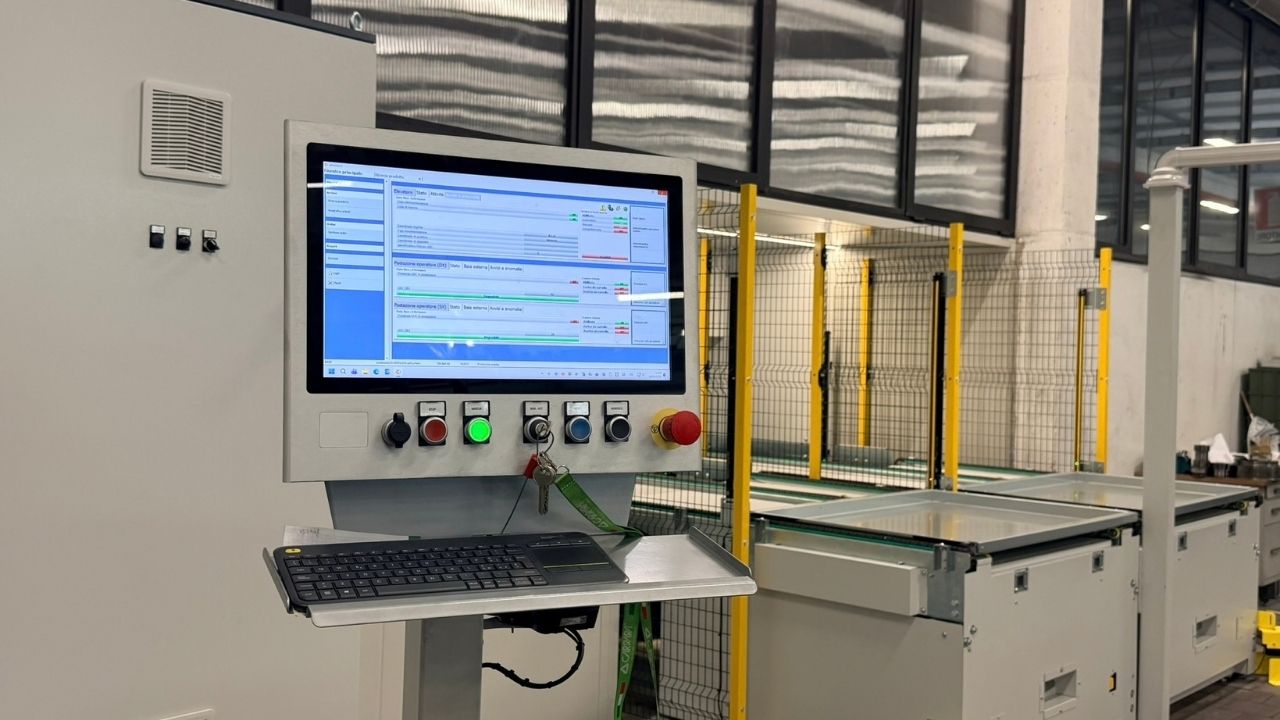
The adopted model reverses the relationship between the operator and the material. “We wanted to move beyond the logic that the warehouse worker must move between multiple storage areas to retrieve materials, and transition to a model where the material automatically arrives at the operator’s side, at a single workstation.” This is the “goods-to-person” principle applied not to the finished product, but to production equipment: a less common application, yet one that often offers a more favorable cost-benefit ratio, because what’s at stake is not the fulfillment time of a customer order but the availability of a resource critical to department scheduling.
One often-overlooked factor concerns the reliability of the picking process. In the Carrara warehouse, the system does more than simply present the drawer: it visually indicates the location of the equipment inside it. “Even when the drawer is large and there are many parts close together, you can see on the monitor which area they’re in: a rectangle lights up exactly where they’ve been placed.” This detail shifts control from the operator’s memory to the machine’s interface, and has direct consequences for the skill set required—a topic we’ll return to later.
Among the requirements that guided the decision, the one with the greatest architectural impact was the location. “A key factor was the ability to install the warehouse outside the factory, using a solution designed specifically for this type of application rather than simply adapting standard systems,” explains Carrara. The rationale is economic rather than technical: every square meter freed up inside the warehouse becomes available for production, which is the highest-value use of the covered area.
This choice, however, transforms the automated warehouse from an industrial fixture into a full-fledged building structure, requiring a set of inspections that do not apply to indoor installations. The exterior structure must be tested for environmental loads—wind, snow, and seismic activity—in accordance with the Technical Standards for Construction (Ministerial Decree of January 17, 2018); the building envelope must ensure watertightness and an adequate level of protection for electrical and electronic components; the thermal control system must maintain the automation’s operating conditions and prevent condensation on metal equipment moved between environments with different temperatures. It must also be assessed, on a case-by-case basis, whether the enclosure falls within the scope of Regulation (EU) 2024/3110 on construction products, which replaced Regulation (EU) 305/2011.
The second non-negotiable technical requirement concerned the load capacity of the drawers, which had to be sized according to the actual weight of the equipment: “We needed drawers with a load capacity adequate for the weight of our molds—a requirement that few companies were able to meet.” This is the type of constraint that, in the design of a vertical storage system, has a cascading effect on the load-bearing structure, the retrieval system, and the maximum achievable height: the individual load capacity of the drawer—more so than the total nominal capacity—is often the parameter that determines which solutions are truly viable.
An integrated automated warehouse does not tolerate ambiguity in master data. If the same mold exists under two different codes, if the item description is not unique, or if the relationship between a production order and equipment is stored in a file outside the ERP system, automation does not resolve the disorganization—it makes it visible and causes a bottleneck. “We were aware that this product would require us to develop other parts of the workflow as well: integration, better management of item codes, and a review of the master data. All of this helped streamline the process. Work was done on both sides: on the machine, on one hand, and on the process and IT workflow, on the other.”
The stated goal during the design phase was full integration with the company’s ERP system, SAP. “For us, it was essential that the warehouse not be an isolated system, but an integral part of the production process. Integration now allows us to link production scheduling with the warehouse, reducing manual tasks and ensuring equipment is available when needed.”
The process was carried out in stages, and it’s worth describing it in detail—without oversimplification—because its gradual nature is one of the most useful pieces of information for those undertaking similar projects.
The physical migration of equipment follows the same incremental logic. There was no “Day Zero”: old and new systems coexist, and the transition occurs gradually as molds are called into production. This approach extends the period of dual management but eliminates the risk of downtime—and in a context where one-third of revenue comes from rush orders, that is no minor detail.
Alla stessa logica incrementale risponde la migrazione fisica delle attrezzature. Non c’è stato un giorno zero: vecchio e nuovo convivono, e il trasferimento avviene progressivamente, man mano che gli stampi vengono richiamati dalla produzione. È una scelta che allunga il periodo di doppia gestione ma azzera il rischio di fermo, e che in un contesto con un terzo del fatturato legato a ordini urgenti non è un dettaglio secondario.
“The ability to combine quality, responsiveness, and economic sustainability in a context that is evolving much more rapidly than organizations’ ability to adapt. European manufacturing companies—and Italian ones in particular—will find it difficult to compete with other markets based solely on price. The true competitive advantage will increasingly depend on the ability to manage complexity: superior service levels, reliable processes, and rapid response times.”
“It’s not just about management: it involves technical departments, production, and all the expertise we’ve built up over the years. Attracting new talent and, above all, passing on the company’s wealth of knowledge to them will become increasingly crucial. And the job market is changing very rapidly: we must be able to adapt and remain attractive to top talent. This means we can’t be the same factory we were even five years ago.”
“Being dynamic and keeping pace with changes that used to take decades to occur but now happen within a year. The ability to change is the most difficult challenge for organizations with large workforces that have been structured over decades. Automation, however, should not be viewed as an end in itself, but as a tool for building simpler, standardized, and scalable processes capable of guiding people and supporting growth over time.”
Describe your needs: our technical team will analyze the information to understand the operational context and provide you with feedback as quickly as possible.