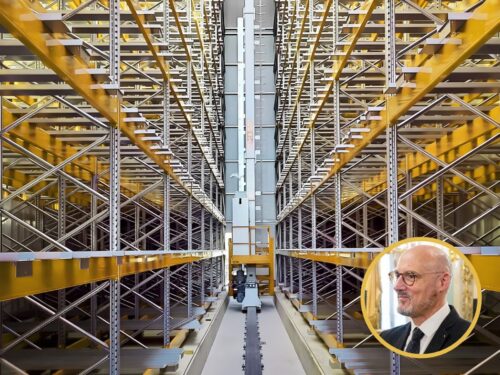



Marco Simoncelli – Researcher, DABC, Politecnico di Milano
A researcher at the Department of Architecture, Built Environment and Construction Engineering (DABC) of Politecnico di Milano, he has spent more than ten years studying the structural behaviour of industrial racking, with a particular focus on seismic safety, structural testing and cold-formed steel structures. He contributes to international research projects and to the work of updating the main European standards in the sector.
What has surprised you most in studying industrial racking?
Its complexity. When I started working on it during my master’s thesis, I wasn’t immune to the common view that industrial racking is a relatively simple structure. As I looked deeper into the subject, though, I discovered that behind seemingly ordinary elements lie extremely sophisticated structural phenomena.
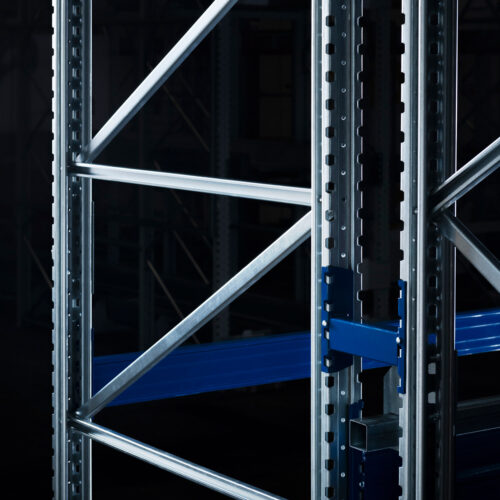
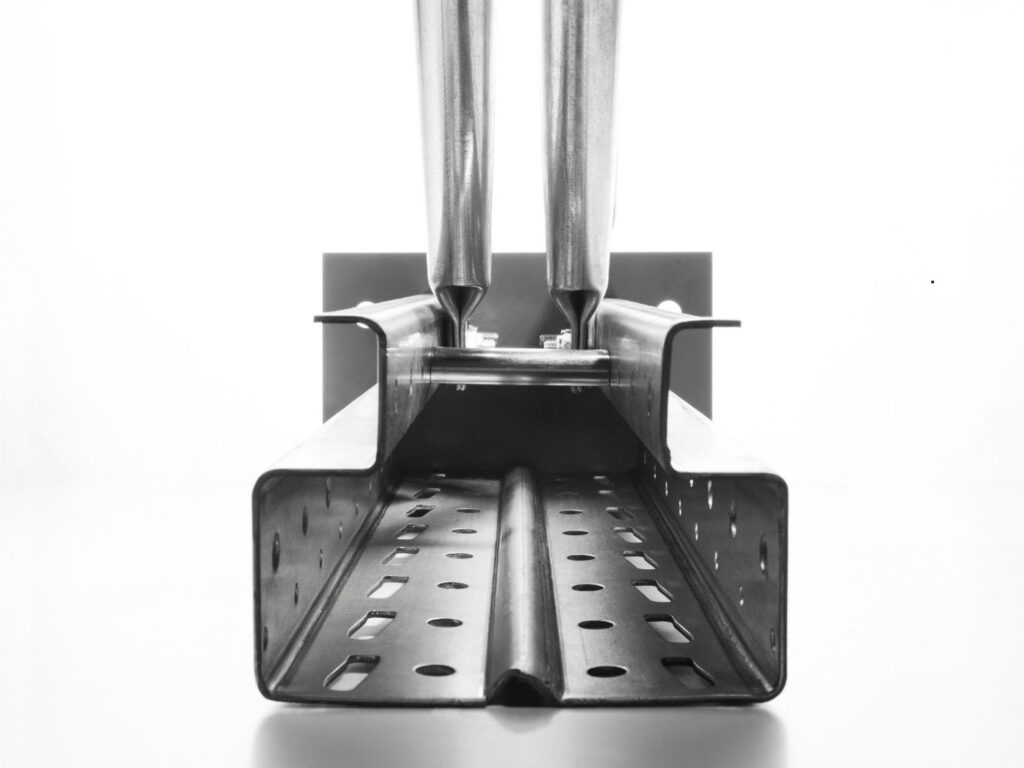
In some respects, designing industrial racking properly can be even more complex than designing heavy structural steelwork. Much of the difficulty comes from the particular geometry of the uprights and the torsional phenomena that govern their behaviour. These are aspects that call for highly specialised expertise and involve advanced topics in structural mechanics, which are rarely covered in depth in traditional university courses. It was precisely the need to get to the bottom of these issues that led me to specialise in the study of warping and non-uniform torsion in thin-walled sections. These are still the areas where I focus much of my technical and research work today.
WARPING
Out-of-plane deformation of the cross-section that affects thin-walled open sections subject to non-uniform torsion.
In recent years, logistics has taken on an increasingly strategic role. Has this also changed the world of design?
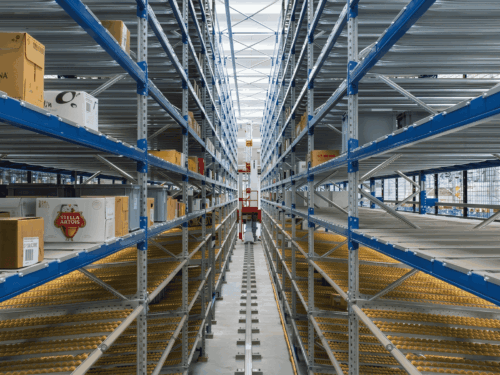
Without a doubt. The growth of logistics and intralogistics has greatly expanded the industrial racking sector, increasing the number of companies and professionals involved. At the same time, applications have become more complex. Today, structures have to carry heavier loads, reach greater heights, integrate with automated systems and meet increasingly complex regulatory requirements.
This evolution calls for a high level of specialisation. Racking can’t be seen as simple industrial fittings: it’s infrastructure that directly affects safety, operational continuity and the reliability of logistics processes.
How important is testing in design?
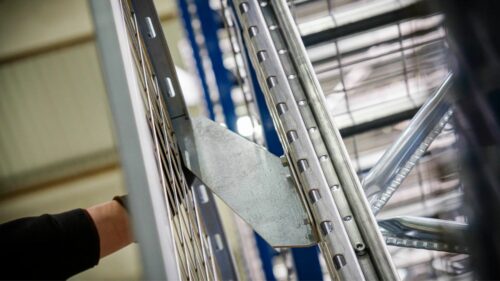
It’s fundamental. The standards themselves recognise this principle through the concept of Design by Testing. The geometric characteristics of racking, the presence of perforations, local deformations and instability phenomena make it difficult to describe its behaviour through theoretical models alone. That’s why experimental testing still plays a central role. Tests are carried out on uprights, connections, base plates and other structural components to understand how the system really behaves and to build reliable models.
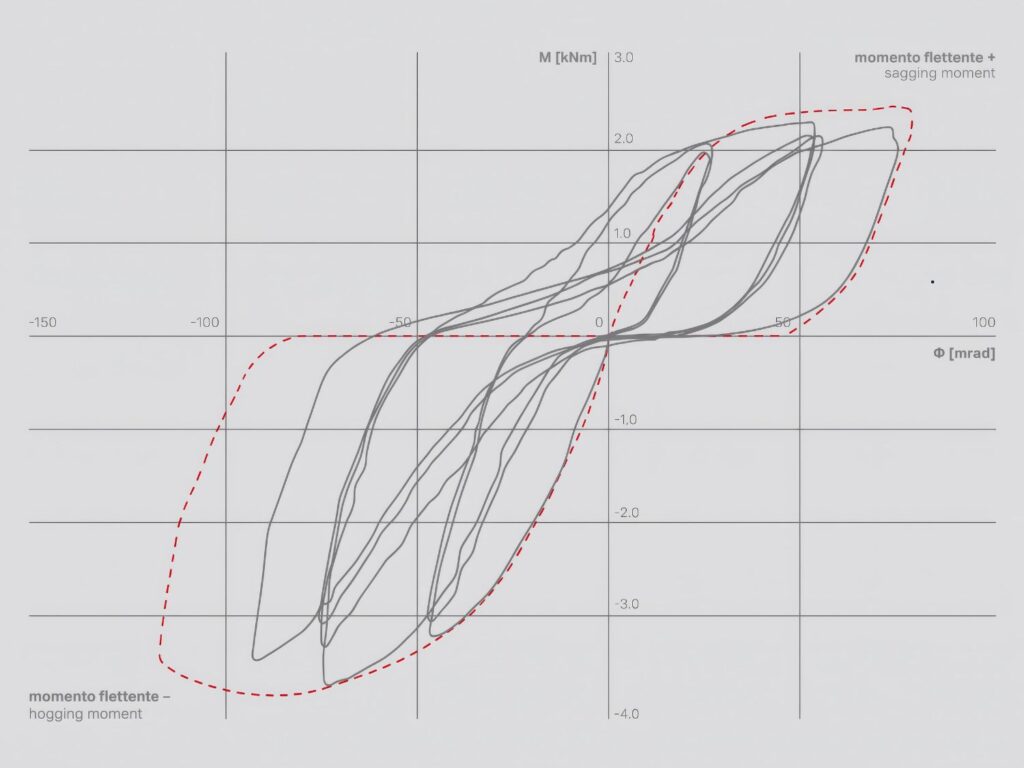
In an age dominated by numerical simulation, this may seem a counter-intuitive approach, but in the racking sector the laboratory is still an indispensable tool. I’d like to stress that testing based on cyclic loading is still underused. Yet if it’s carried out correctly, it can make a huge difference in improving seismic design.
DESIGN BY TESTING
A design route permitted by sector standards, in which component strengths and stiffnesses are derived from experimental tests rather than from analytical calculation alone.
What is the relationship between experimental research and the development of technical standards?
It’s a direct one. The formulas in the standards aren’t immutable truths. They’re a synthesis of the knowledge available at a given point in time. When new test campaigns reveal phenomena that weren’t fully understood, or make it possible to describe structural behaviour more accurately, research contributes to updating the design rules. That’s what happens with the Eurocodes, which are periodically updated to incorporate established scientific findings. Standards evolve together with knowledge.
EUROCODES
A series of European standards for structural design (EN 1990–EN 1999), periodically updated by CEN to incorporate established research findings.
Does industrial racking present particular critical issues in the event of an earthquake?
Yes, and they stem from its very nature. Unlike conventional buildings, in racking the weight of the structure is a very small fraction of the weight of the stored goods. In many cases, the self-weight may be around five per cent of the total load. This means that very large masses are supported by extremely slender, lightweight elements.
During an earthquake, the structure therefore tends to deform significantly, generating complex load redistribution phenomena and potential instability.
On top of this comes a second characteristic: limited dissipative capacity. Racking generally has a lower capacity to absorb seismic energy than many conventional steel structures. Unlike those structures, in racking seismic energy is dissipated only at the upright-to-beam and base connections. This means a low dissipative capacity for the system as a whole, as well as an inevitable degradation of these elements, which are key to global stability.
More and more. In recent years there’s been growing awareness that safety and operational continuity are closely linked. An earthquake doesn’t just cause structural damage. It can cut off access to goods, disrupt logistics processes and have significant economic consequences along the entire supply chain.
That’s why design can’t stop at checking the minimum level of safety required by the standards: it has to consider the system’s ability to remain functional even under critical conditions.
RESILIENCE
The ability of a warehouse to limit the effects of a critical event and quickly restore its operational functionality.
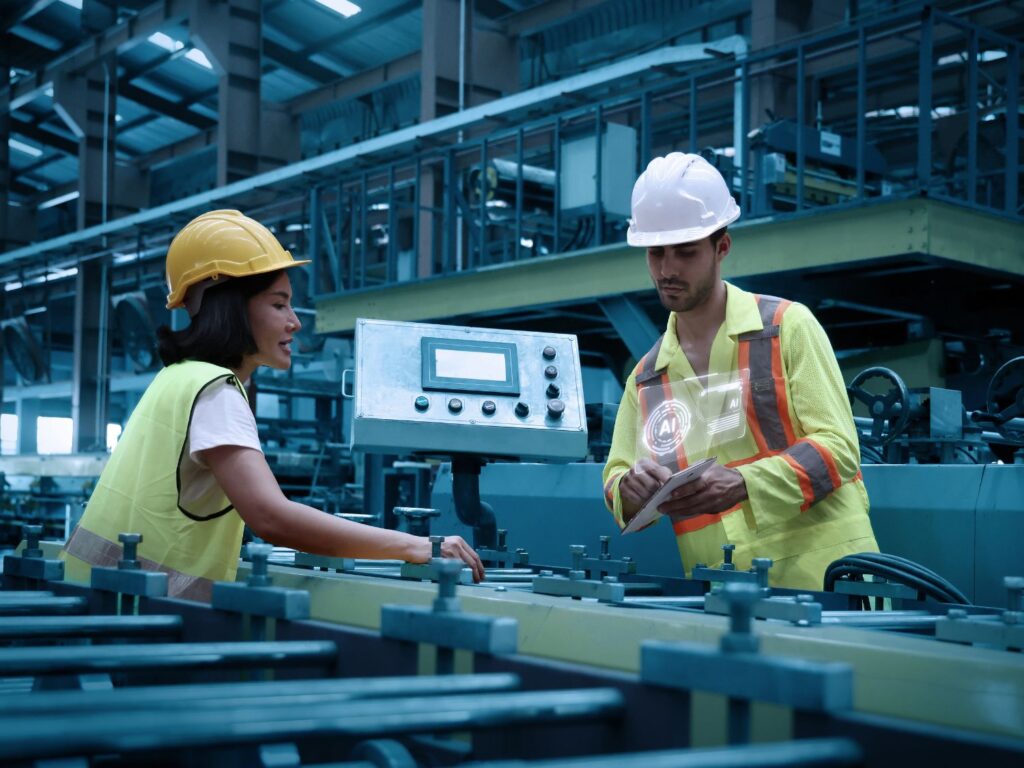
I think artificial intelligence is a great opportunity, but also a challenge.
One of the most promising applications is predicting the results of experimental tests. With a sufficient amount of reliable data, machine learning algorithms could learn the relationship between geometries, materials, configurations and structural performance. This would significantly reduce the number of tests needed to validate new solutions.
The real limitation, however, isn’t computing power. It’s data. To train these systems properly, you need large amounts of reliable, structured and shared information. Today that data is often spread across companies, universities and laboratories, and isn’t always easily accessible for reasons of confidentiality and copyright.
Exactly. Artificial intelligence can be very effective, but the quality of the results always depends on the quality of the information available. That’s why I believe one of the most important challenges in the coming years will be building ever larger and more reliable databases that connect research, testing and industrial applications. The real value won’t come only from more powerful software, but from the ability to turn data into usable knowledge.
Looking ahead to the next ten years, which innovations will have the greatest impact on storage structures?
I see two main directions. The first concerns materials. The growing use of high-strength steels will deliver ever higher performance, but it will also require new knowledge to understand how these steels behave and to develop appropriate design criteria.
The second concerns seismic dissipation. At European level, we’re working on the EU-funded SAVERACK project, which focuses on developing innovative systems for absorbing seismic energy in industrial racking. The project is being carried out by a transnational consortium that brings together leading European universities, racking manufacturers and engineering design firms. If these systems prove effective and economically viable, as we expect them to, they could help redefine the approach to seismic safety in the sector.
SAVERACK
A European research project dedicated to innovative systems for absorbing seismic energy in industrial racking.
What is the most important challenge facing the sector?
Striking a balance between technological innovation and technical expertise.
New materials, advanced numerical simulation, dissipative devices and artificial intelligence open up very interesting prospects. But no technology will ever replace an understanding of structural phenomena. Real progress will come from the ability to integrate research, testing, design and data within a single process of growing knowledge. That’s the necessary condition for building structures that are increasingly reliable, safe and able to meet the needs of today’s logistics.
“…no technology will ever replace an understanding of structural phenomena.”
Describe your needs: our technical team will analyze the information to understand the operational context and provide you with feedback as quickly as possible.