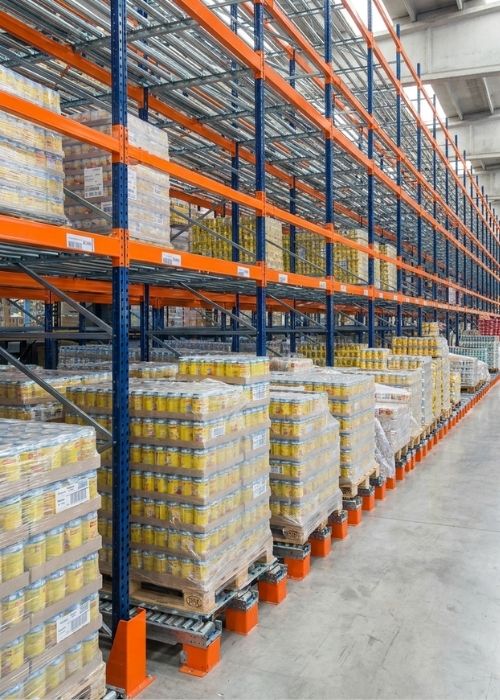
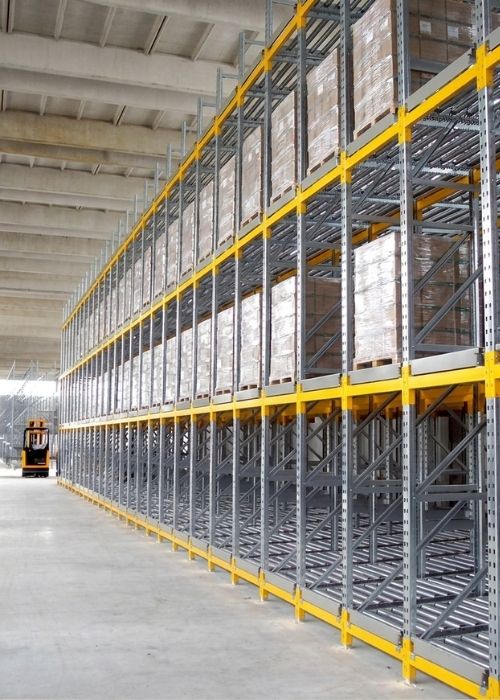
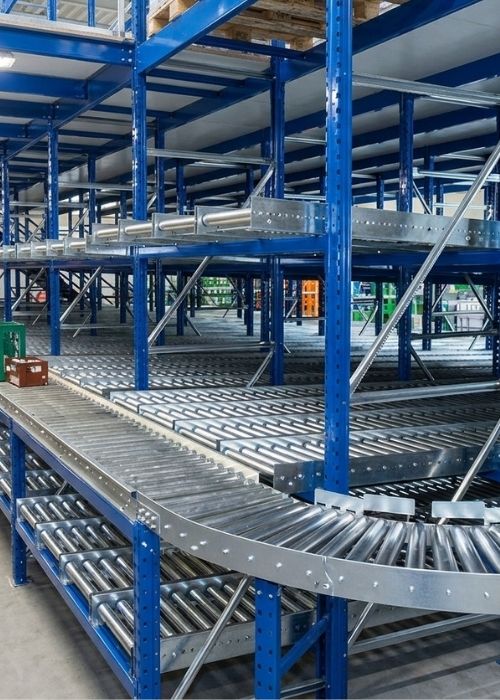
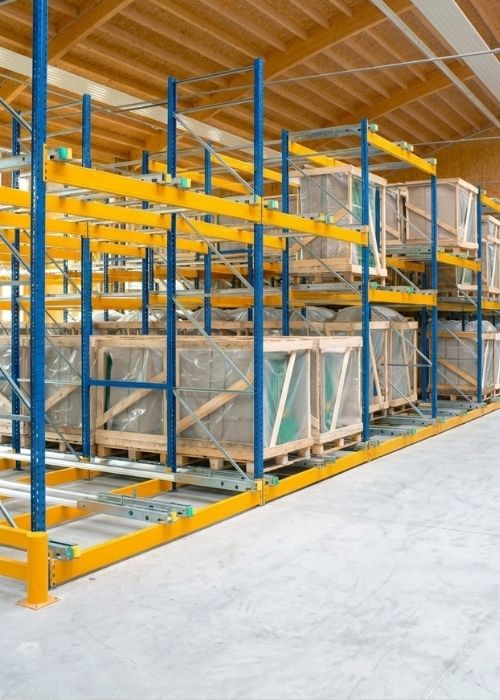
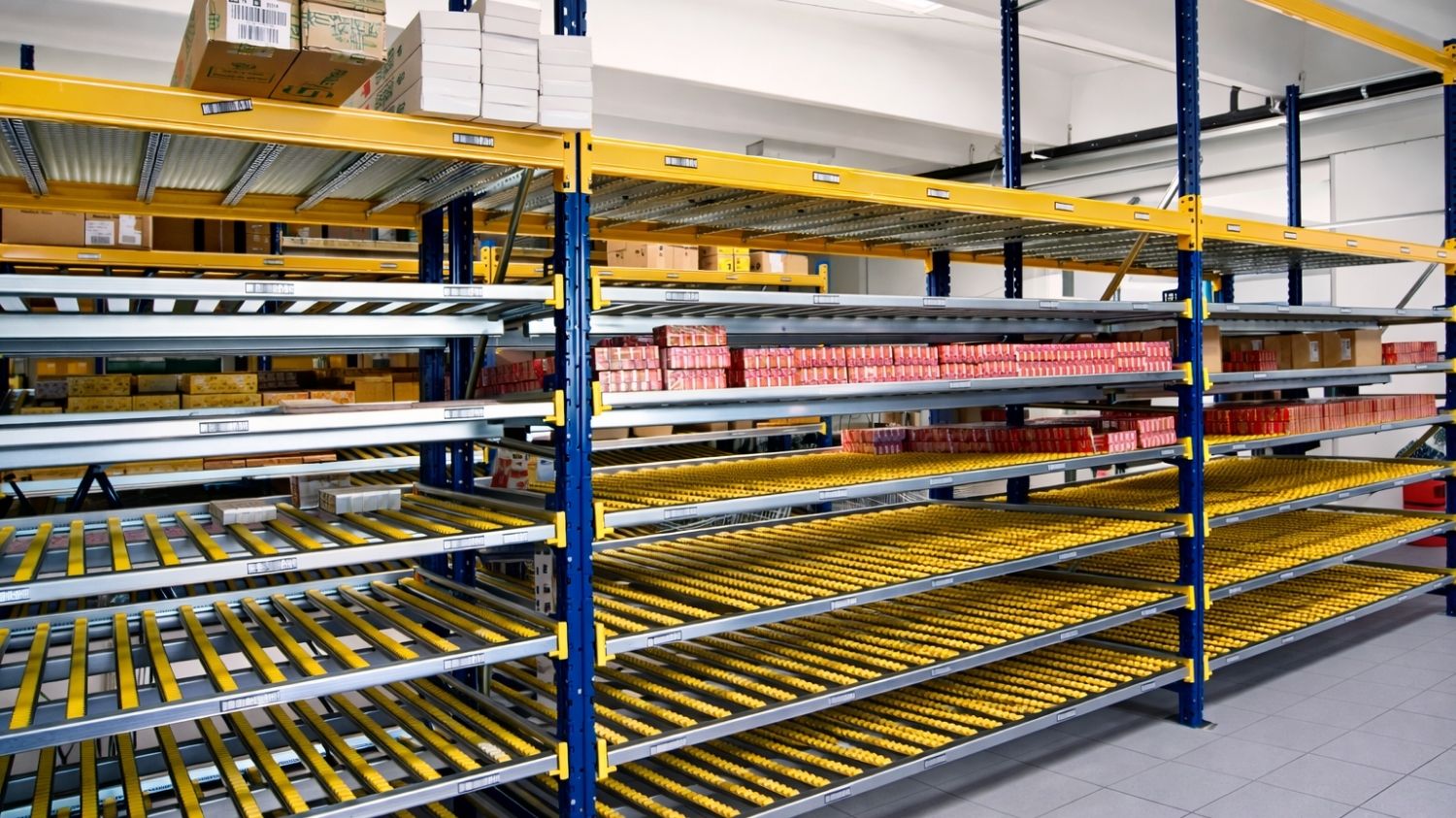
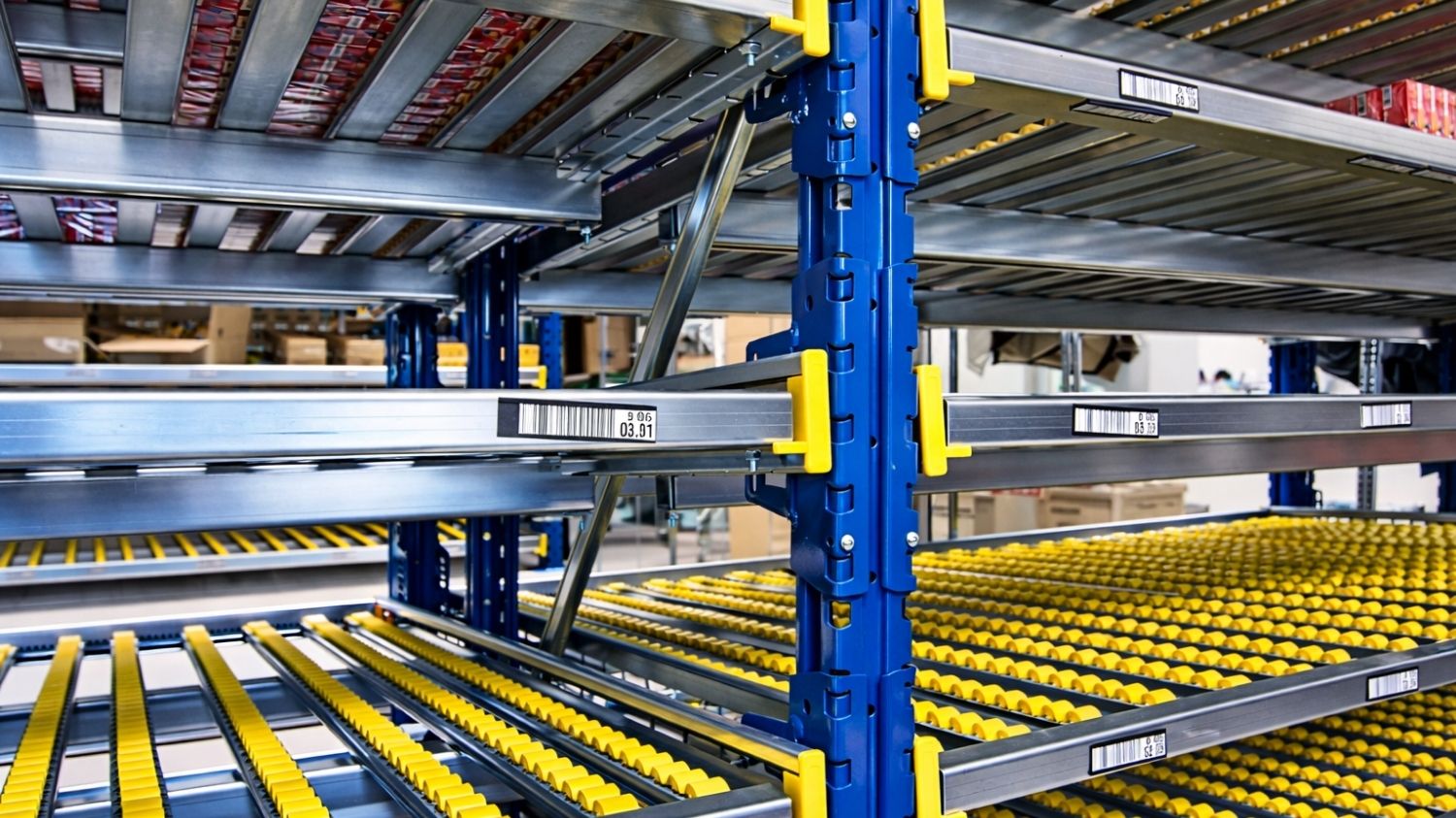
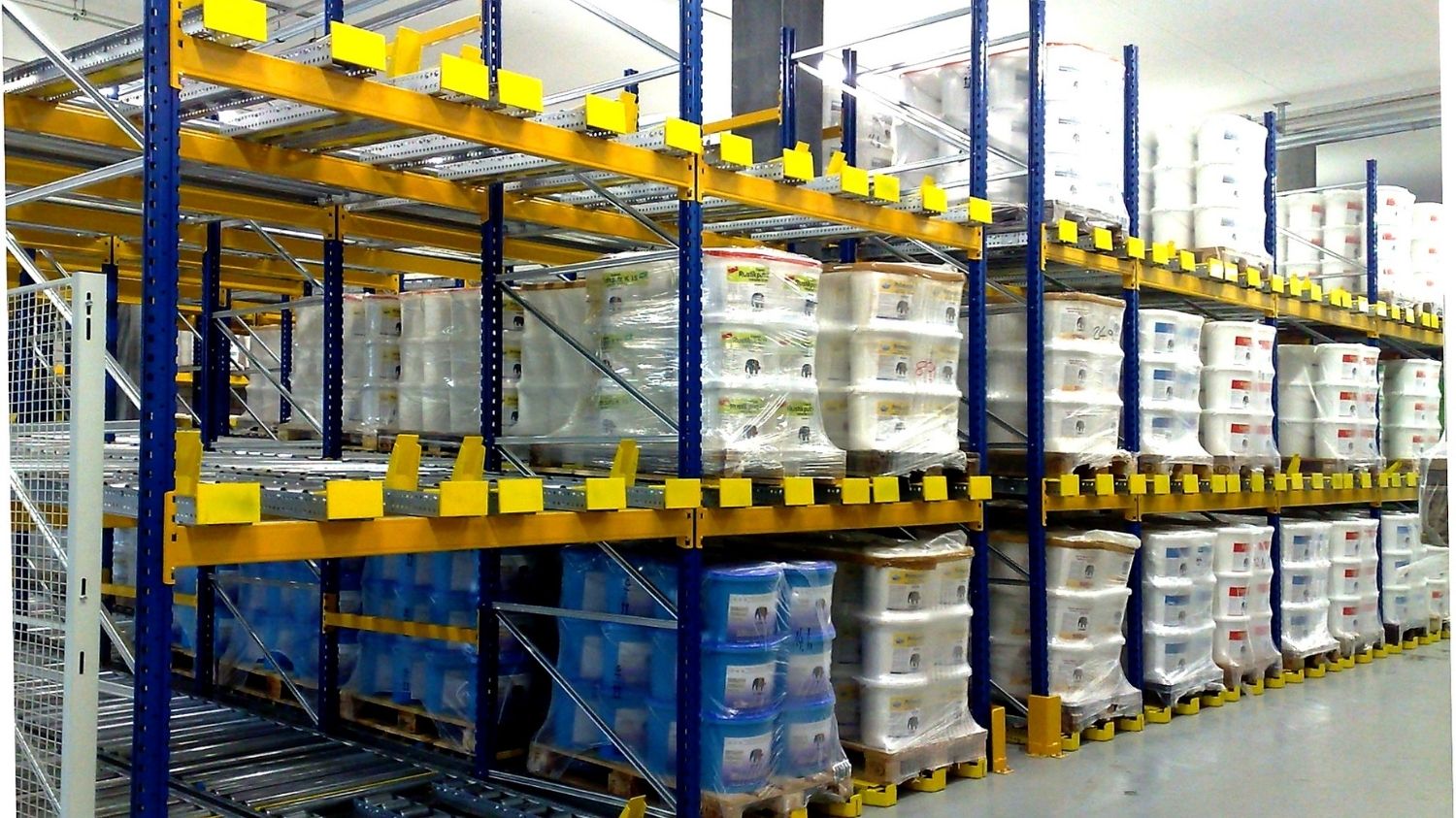



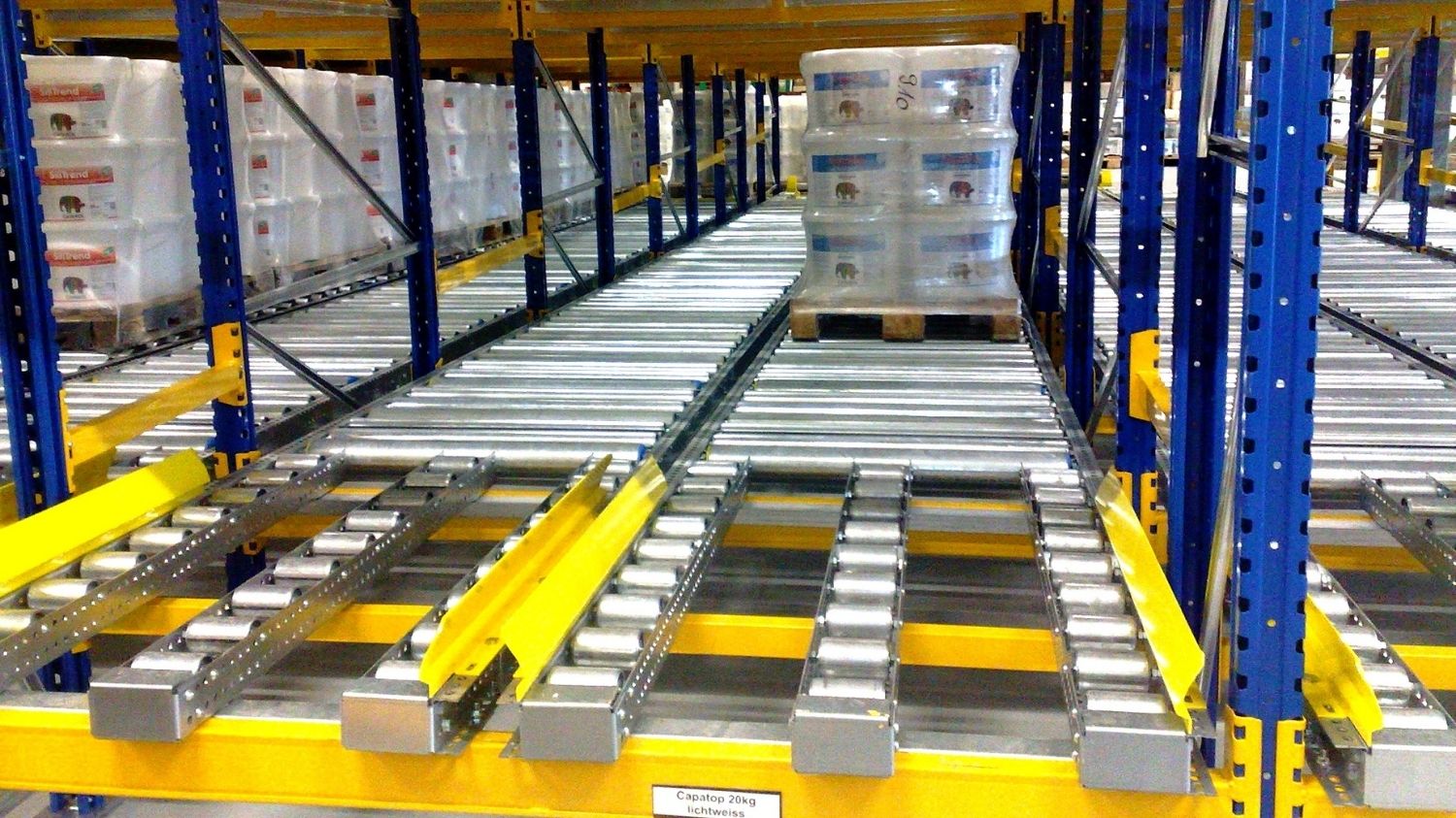
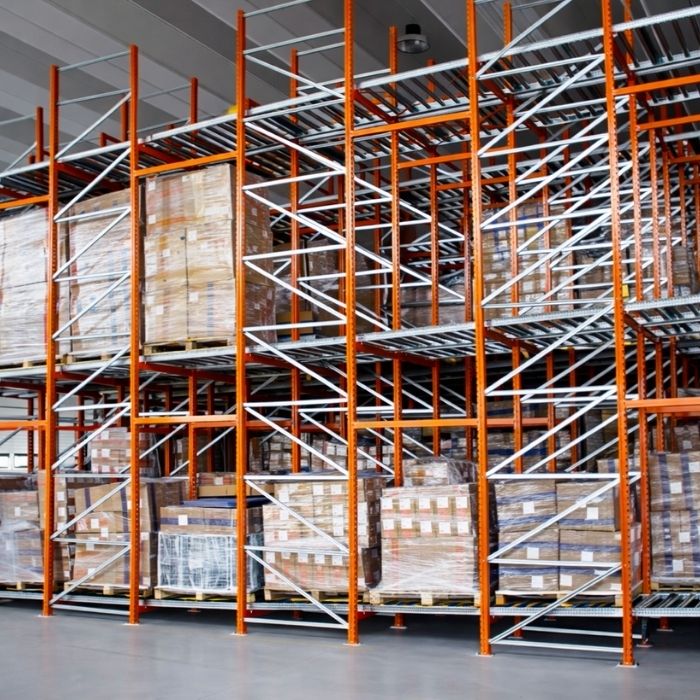
Pallet flow racking, also known as gravity pallet racking or dynamic pallet storage, is a high-density accumulation storage system in which pallets move automatically along inclined roller lanes under the force of gravity. The system operates according to the FIFO (First In, First Out) principle, ensuring that the first pallet loaded is the first to be retrieved. This makes it particularly suitable for products with stock rotation requirements, batch control or expiry-date management. Loading and retrieval take place on separate faces of the system: pallets are loaded from the replenishment side and retrieved from a dedicated picking face. This separation of inbound and outbound flows improves traffic organisation, reduces vehicle interference and enhances both operational continuity and safety. In pallet storage applications, flow lanes can reach significant depths—up to 30 pallets deep—with a typical slope of approximately 4%, defined according to load characteristics, pallet type and throughput requirements. In the Modulblok system, pallets—typically handled from the 800 mm side (short-side entry)—move towards the picking face by gravity. Travel speed is controlled through speed controllers and braking rollers, ensuring smooth pallet flow and safe operation throughout the entire lane.
Pallet flow racking systems optimise material flows through FIFO inventory management, improving stock rotation and increasing operational efficiency in high-throughput warehouse environments.
Gravity-driven pallet movement ensures natural FIFO stock rotation, simplifying the management of batches and expiry dates while improving product traceability throughout the warehouse.
Deep-lane storage and reduced aisle requirements enable exceptionally high storage density, delivering space savings of up to 60%, depending on warehouse layout and SKU mix.
The separation of loading and retrieval faces creates more organised material flows, reducing forklift travel distances and handling times while increasing overall operational efficiency.
Higher storage density reduces the volume that needs to be cooled, helping lower energy consumption in cold storage facilities and temperature-controlled warehouse environments.
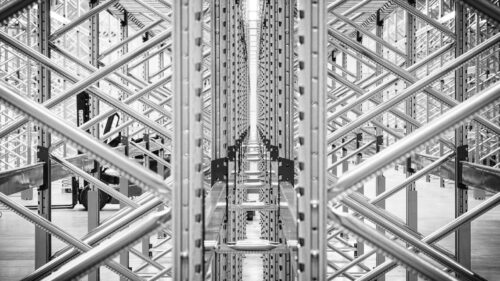
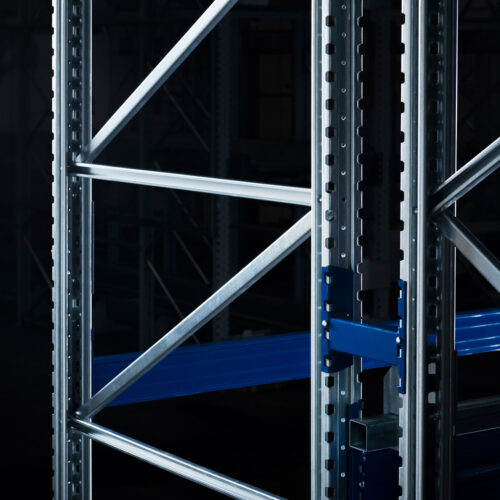
A selection of pallet flow racking configurations illustrating the FIFO operating principle through deep accumulation lanes, organised material flows and high-density storage solutions.
Warehouse Engineering is Modulblok’s editorial platform dedicated to the industrial culture of modern intralogistics. Created to analyse and interpret the transformations shaping today’s warehouse systems, it provides a space for insight, knowledge sharing and industry perspectives. Through technical articles, market analysis and expert contributions, the magazine explores the technologies, operating models and specialist expertise that are redefining the role of logistics across industrial and distribution environments. Its objective is to offer a structured perspective on the sector, connecting technological innovation with storage system design and engineering to better understand the evolution of warehousing and intralogistics.
Describe your needs: our technical team will analyze the information to understand the operational context and provide you with feedback as quickly as possible.