Why choose Self-Supporting Warehouses Modulblok?
What is a self-supporting warehouse and when it is worth adopting
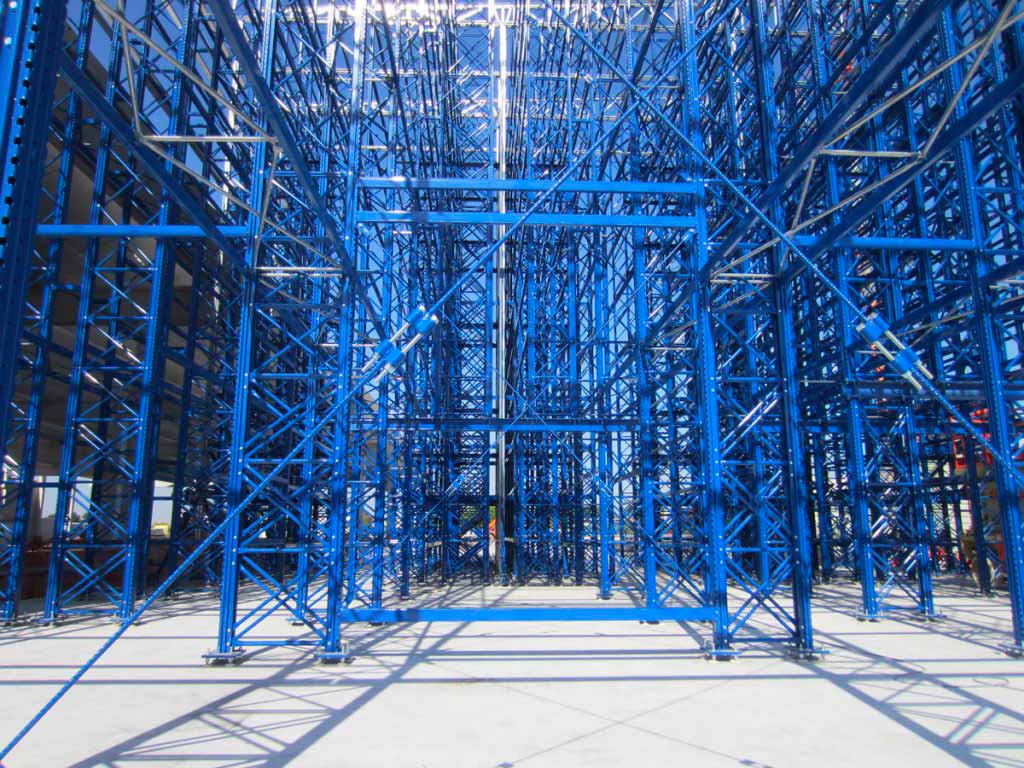
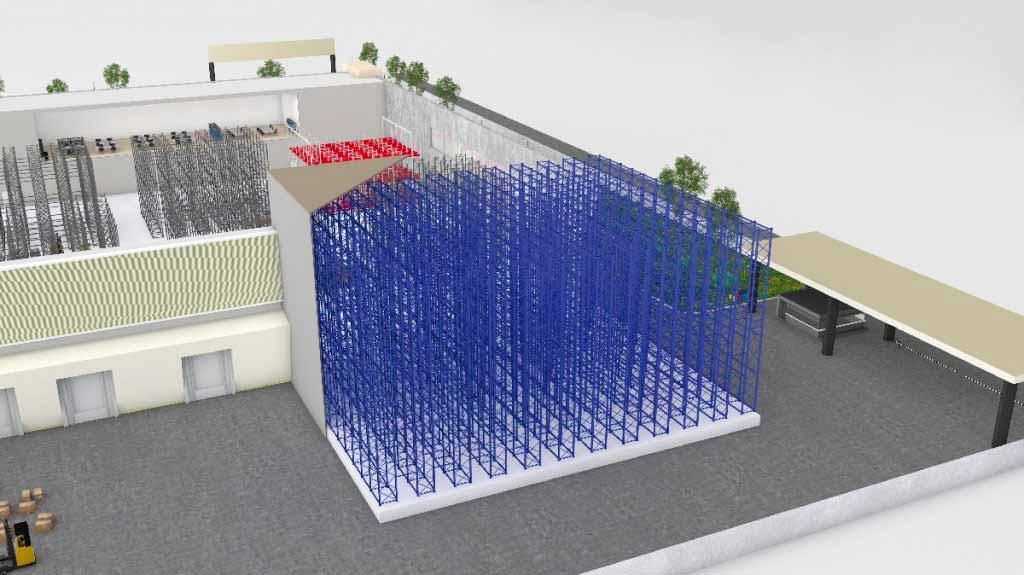
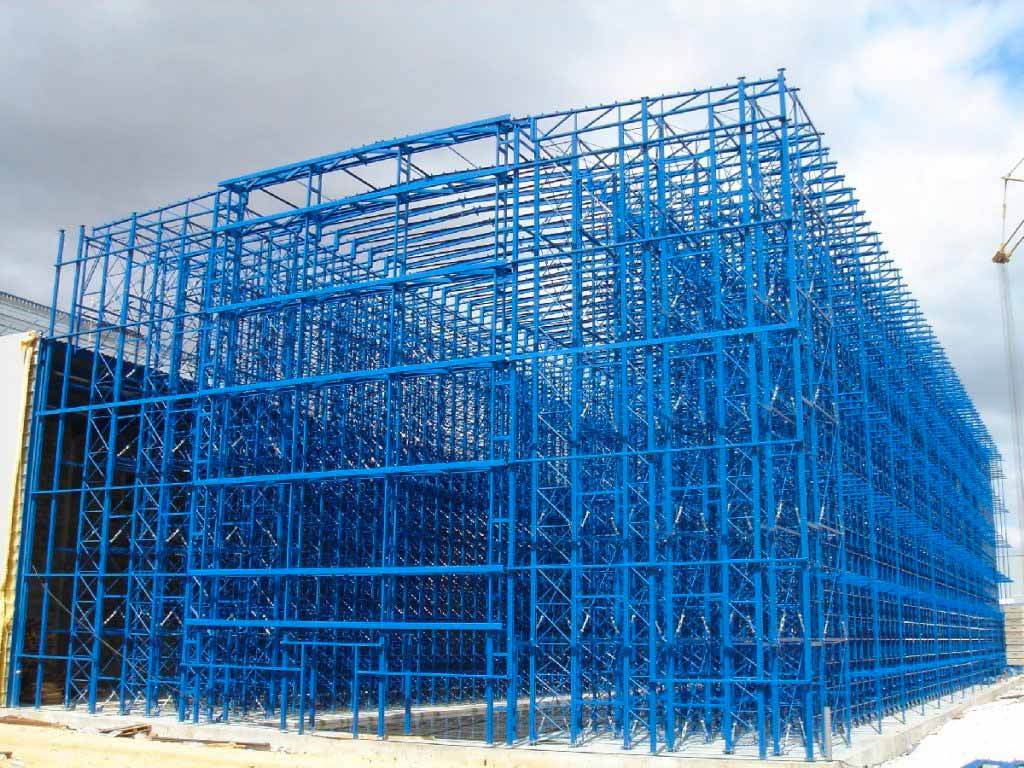
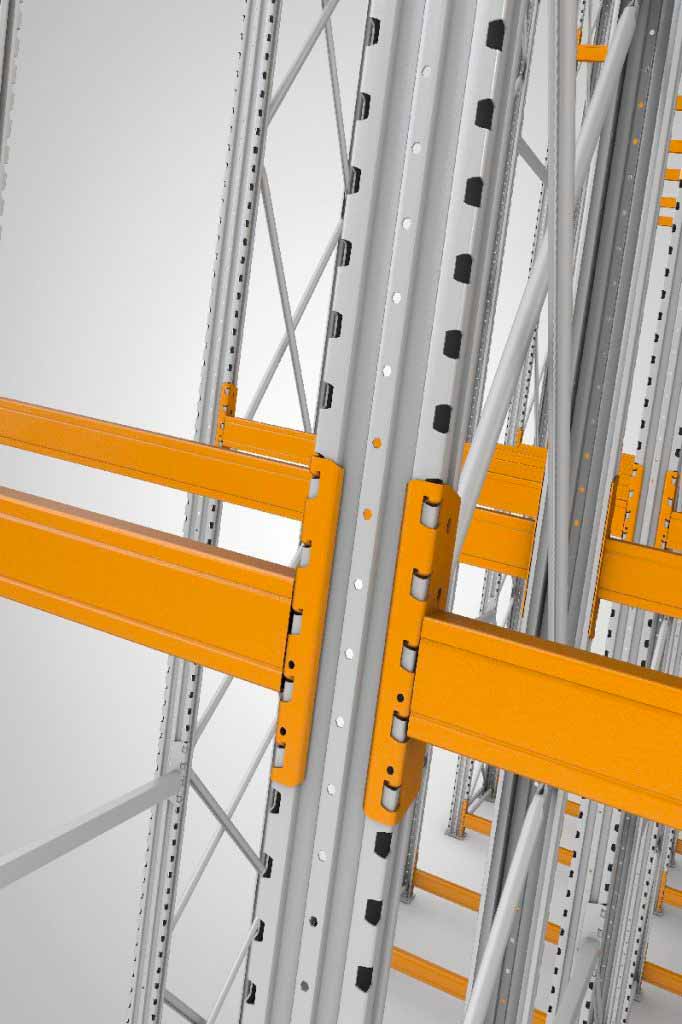
Modulblok self-supporting warehouses are systems in which the racking itself serves as the load-bearing structure of the building — supporting the roof, façades, cladding, and integrated systems. In this construction model, the racking is the building.
This solution enables heights exceeding 20–30 meters, providing greater volumetric storage capacity compared to traditional warehouses with separate buildings and internal racks.
Self-supporting warehouses are ideal when the goal is to increase storage density, reduce civil works, and design a system ready for automation — including stacker cranes, shuttles, conveyors, and WMS/WCS integration.
These structures are designed in full compliance with European and national standards for steel structures and industrial storage systems, incorporating seismic load assessments where required.
By combining the load-bearing structure and building envelope into a single integrated system, Modulblok ensures maximum safety, volume optimization, and adaptability to any logistical or operational configuration.
The advantages of Modulblok self-supporting warehouses
- Maximum space utilization – superior capacity-to-area ratio compared to traditional buildings with internal racking.
- Reduced civil works – the racking replaces parts of the building structure, resulting in shorter construction times and optimized CAPEX.
- Native automation – ideal integration with stacker cranes, shuttle systems, and WMS/WCS platforms.
- Scalability – self-supporting warehouses can be expanded vertically and horizontally, following business growth and volume evolution.
- Structural strength and safety – engineered to withstand heavy loads, wind, snow, and seismic forces in full compliance with regulations.
- Energy efficiency – reduced non-storage volume, lower thermal dispersion, and more compact technical systems ensure optimal energy performance.
Where self-supporting warehouses are recommended
Self-supporting warehouses are ideal for:
- Companies seeking to optimize floor space and maximize volumetric capacity
- Large logistics platforms and 3PL providers
- High-turnover retail and e-commerce operations
- Manufacturing sites combining production and storage areas