6 May 2026
Racking damage: what the data reveals (and why inspection alone is no longer enough)
In warehouse operations, racking damage is often treated as an isolated event: an impact, a report, a repair. In reality, it is not an isolated occurrence, but an indicator. When analysed systematically, these indicators provide insight into how the system is performing, where critical issues are developing, and—most importantly—how they are likely to evolve over time. This awareness drives a shift in approach: from managing individual damage events to understanding the phenomenon as a whole.
From inspection to data: reading what is not immediately visible
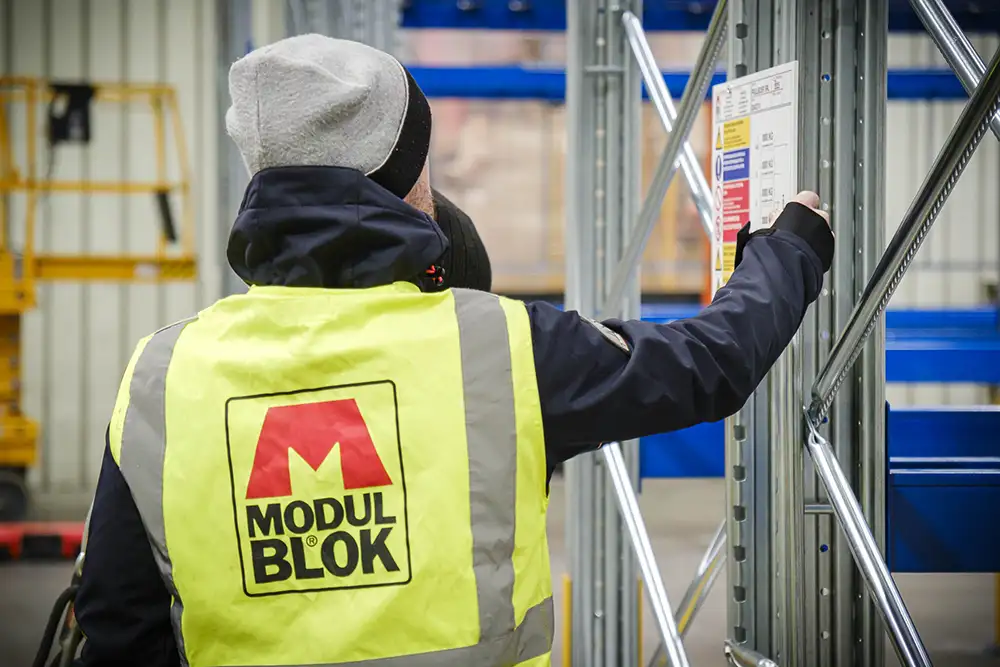
Over the past five years, the digitalization of Modulblok’s inspection process has enabled this transition, transforming field observations into a structured and comparable data set over time:
- over 4,000 inspections conducted
- more than 250,000 anomalies classified
- over 600 sites monitored
When these data points are analysed collectively, operational insights emerge that are not evident at the level of a single report:
- beams and uprights account for the majority of critical anomalies
- damage is concentrated in the lower storage levels, where interaction with handling equipment is highest
- risk profiles vary depending on the operational context (selective pallet racking, drive-in systems, cold storage)
The implication is clear: a warehouse is not a uniform system and cannot be managed with a one-size-fits-all approach.
The limits of a traditional approach: when the process breaks down
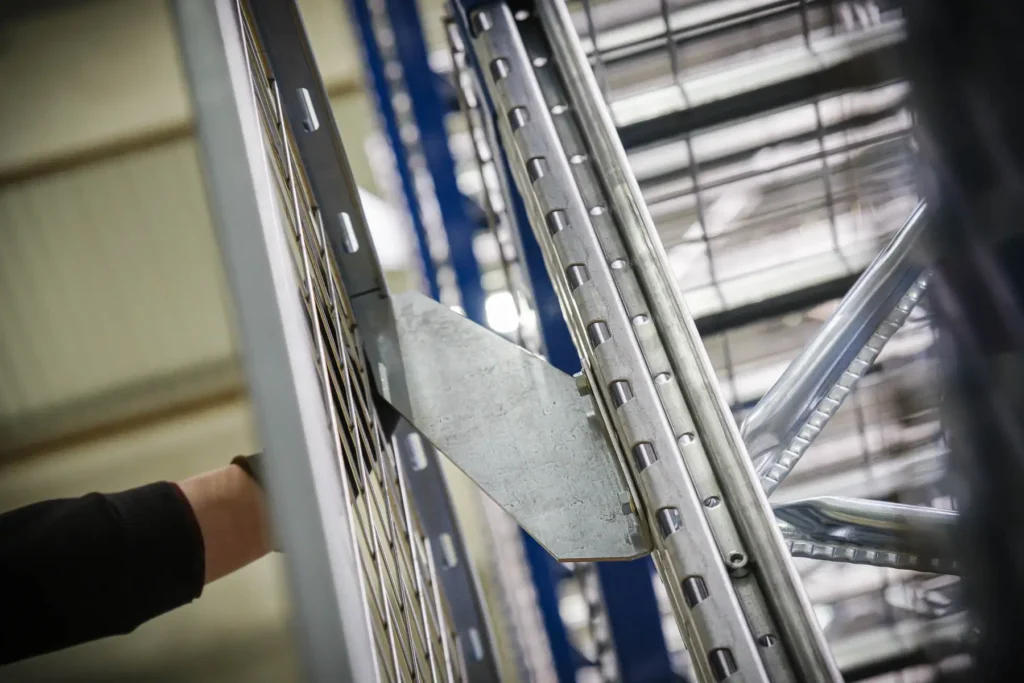
The most critical issue is not the damage itself, but how it is managed. Only 40% of identified anomalies are resolved by the subsequent inspection. This means that, in most cases, the process is interrupted: the inspection identifies the issue, but the corrective action does not follow. This is where the gap between compliance and effective system management emerges.
Effective racking management requires a closed-loop process:
- identify the damage
- assess its severity
- plan the intervention
- verify resolution
The data highlights a consistent pattern:
- where the cycle is completed, system performance improves over time
- where it is not, damage accumulates
The limitation of the inspection report is therefore structural: it provides a snapshot. Managing risk, however, requires a dynamic perspective, capable of setting priorities and measuring the effectiveness of actions over time.
From data to decision: the real competitive advantage
At this stage, damage analysis evolves from a technical activity into a management lever. The model developed by Modulblok introduces a shift in perspective: it does not simply describe the condition of the racking, but interprets its evolution over time.
Through a multi-year data set, it becomes possible to identify recurring patterns, deterioration dynamics, and correlations between system configuration, operational context, and damage frequency.

Within this framework, the development of the Warehouse Score Index (WSI) provides a synthetic indicator that enables:
- comparison of site conditions over time
- consistent assessment of risk levels across different warehouses
- anticipation of critical areas before they require urgent intervention
- support for maintenance planning and budget allocation
The innovative value lies not in the data itself, but in its ability to become predictive. The approach moves beyond retrospective analysis towards predictive consultancy, where inspection data becomes a tool to guide decision-making and progressively improve warehouse management.
From data to action
Every warehouse experiences damage—it is inherent to operations.
The difference lies in the ability to anticipate it, interpret it, and translate it into effective action.
For those interested in exploring this approach and assessing their specific case, a technical discussion with the Modulblok team can be initiated, starting from what matters most: understanding how the system is evolving over time.