6 March 2026
Modulblok ISO 3834-2 Certified: welding quality as a structural guarantee
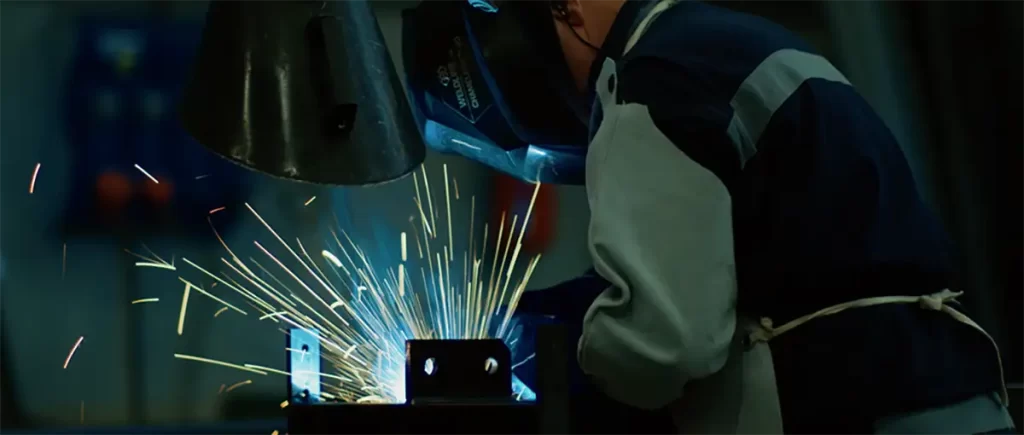
When welding plays a critical role in the safety and performance of a structure, simply “being able to weld” is not enough: you need a system that makes quality repeatable, measurable, and demonstrable. UNI EN ISO 3834-2 certification is the international benchmark for companies carrying out fusion welding of metallic materials with structural relevance: it defines the comprehensive quality requirements (the highest level provided by the standard) and is a key enabler for operating with consistent standards in high-criticality sectors such as structural steelwork, plant engineering, pressure equipment, oil & gas, and infrastructure.
Since 2012: structured controls, traceability, and verifiable competence (including robotic processes)
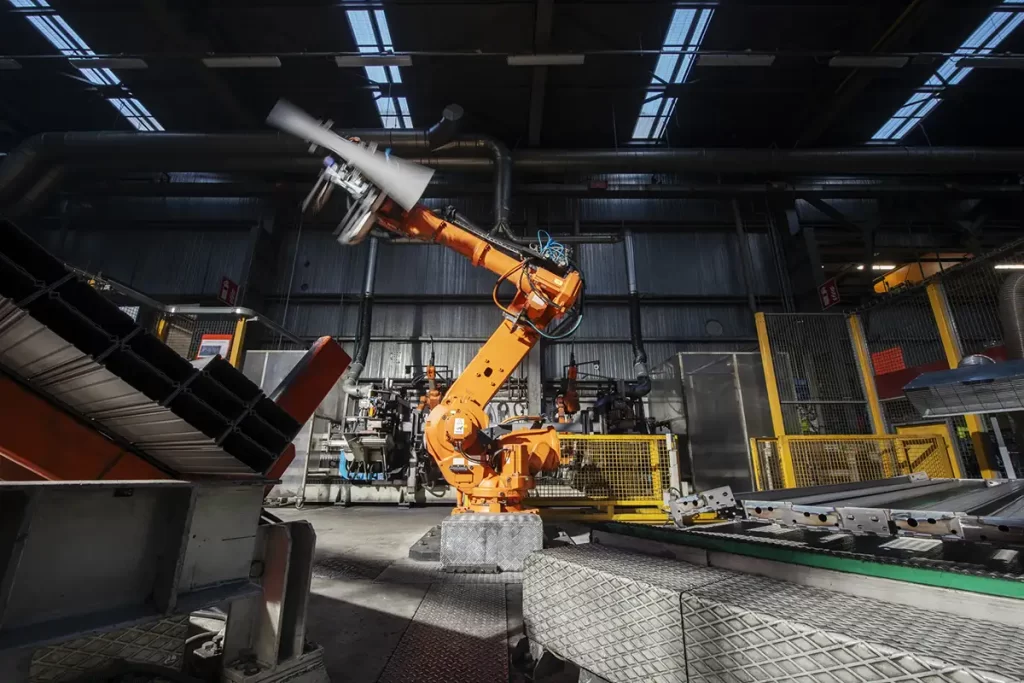
At Modulblok, this approach is not new: we have been UNI EN ISO 3834-2 certified since 2012, demonstrating a long-standing, continuous focus on the quality of our industrial processes. In practical terms, the certification ensures that welding activities are governed by rigorous organisational, technical, and documentation requirements—from clearly defined responsibilities and the presence of qualified personnel for welding coordination, to the qualification of welding procedures (WPS/PQR) and welders/operators. It also means reducing the risk of defects, rework, and nonconformities through defined machine parameters, planned controls, and verification activities which, during procedure qualification, include destructive testing, and then become non-destructive in-process controls during production. This level of control applies both to conventional welding and to highly automated processes: Modulblok operates a dedicated welding work centre with anthropomorphic robots, where production repeatability is supported by the same requirements for traceability (base and filler materials, equipment, records) and process control set out by the standard.
UNI EN ISO 3834-2: welding quality as a structural requirement
At Modulblok, this approach is not new: we have been UNI EN ISO 3834-2 certified since 2012, demonstrating a continuous focus on the quality of our industrial processes. In concrete terms, the certification ensures rigorous control of the welding process through organisational, technical, and documentation requirements that translate into:
- Clear responsibilities and qualified personnel for welding coordination
- Qualification of welding procedures (WPS/PQR) and qualification of welders/operators
- Control of base and filler materials, with full traceability
- Defined machine parameters and production planning and control
- Inspections and tests: destructive testing during qualification, then non-destructive in-process controls in production
- Nonconformity management and records to demonstrate compliance and continuity of control
This level of control applies both to conventional welding and to highly automated processes: Modulblok operates a dedicated welding work centre with anthropomorphic robots, where production repeatability is supported by the same qualification, control, and traceability criteria required by the standard.
A measurable commercial advantage: reliability that protects projects, timelines, and accountability
From the buyer’s perspective, ISO 3834-2 is a tangible indicator of industrial reliability: it reduces uncertainty around product quality and repeatability, safeguards timelines and costs (less rework, fewer nonconformities), and strengthens traceability—essential for projects where compliance is non-negotiable. Moreover, for companies manufacturing self-supporting structures, ISO 3834-2 is a necessary integration in line with EN 1090, because it reinforces control at the most sensitive point: the structural joint.
In short, it is not just a “certification”, but a method guarantee—and therefore a distinctive asset that makes the project more robust, the supply more reliable, and quality more defensible over time.